Working with Revaluation
Revaluation involves revaluing each currency record by type. The total local equivalent from all currency records with the same market and position type is checked against LOCAL.EQUIVALENT from the ASSET&LIAB records in the POSITION file. If there is a difference, then the last record for the currency on the asset and liability CONSOLIDATE table is adjusted by that amount.
Special movement entries are raised for the amount for each revaluation based on the settings in REVALUATION.PARAMETER, as shown in the screenshot below:
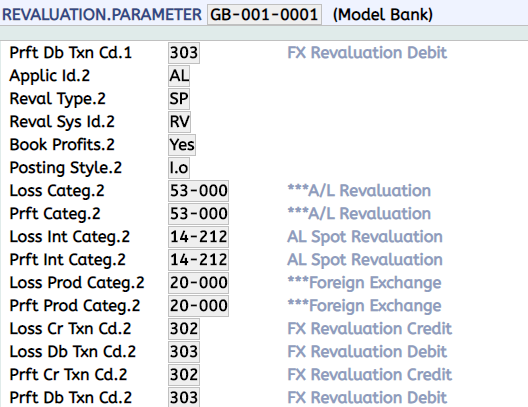
The contingent Central Reporting Base (CRB) records can be re-valued using either the Reval Rate (if specified in the CURRENCY record) or by the mid-market rate when the Reval Rate was not specified. In order to do this, both the application and the type have to be specified for revaluation in the assets and liabilities record in CONSOLIDATE.COND. If a record is re-valued through either a movement in the mid-market rate or by Reval Rate, then a special movement entry is raised. Profit and loss entry is not raised for contingent revaluation.
Accounting Entries for Revaluation
Revaluation is calculated on spot or rebate basis as specified for the application in the parameter record.
Asset and Liability revaluation is specified in the revaluation parameters as a special application.
| ENTRY | SOURCE | STMT ENTRY | CATEG.ENTRY | PRODUCT CATEGORY | TXN CODE | |
|---|---|---|---|---|---|---|
| Revaluation Loss | DR P&L Exchange | N/A | N/A | LOSS.CATEG | LOSS.PROD.CATEG | LOSS.CR.TXN.CD |
| Cr Exchange adjustment | ACCOUNT.CLASS Record ExchAdj | LCYCATEGNNNN | N/A | N/A | LOSS.DR.TXN.CD | |
| Revaluation Profit | DR Exchange adjustment | ACCOUNT.CLASS Record ExchAdj | LCYCATEGNNNN | N/A | N/A | PRFT.DR.TXN.CD |
| CR P&L Exchange | N/A | N/A | PRFT.CATEG | PRFT.PROD.CATEG | PRFT.CR.TXN.CD |
Posting PL with FCY Asset and Liability Attributes
The revaluation PL can now be reported from either position revaluation or asset and liability (AL) revaluation. The default setting is to report the revaluation PL from position revaluation, but this can be changed by configuring the Al Reval Gain Loss field as Assetliab in the REVALUATION.PARAMETER table. Read Configuration for more information on the configuration options the system offers in Revaluation.
The option in the Al Reval Gain Loss field allows for more granular reporting of revaluation gains and losses, that is, by currency, business unit, or product line. When set so, the PL entry has the same reporting attributes as the FCY asset and liability being revalued.
- Position revaluation - The PL entry is generated based on the position revaluation parameters, that is, the PL entry has the same reporting attributes as the position revaluation report.
- Asset and liability revaluation - The PL entry is generated based on the asset and liability revaluation parameters, that is, the PL entry has the same reporting attributes as the asset and liability revaluation report.
The PL entry for the profit or loss on revaluation is generated based on the following setting:
| Stage | Al Reval Gain Loss = Position (Default) | Al Reval Gain Loss = Asset & Liab |
|---|---|---|
| Revaluation of FCY Position | Generates PL (CATEG.ENTRY) for any resulting revaluation profit or loss. | PL (CATEG.ENTRY) is not generated as it is raised as a contra entry during the revaluation of FCY asset and liabilities. |
| Revaluation of FCY Assets and Liabilities | NA | Generates PL (CATEG.ENTRY) as a contra entry for the FCY CRF reval entry by CAL and Asset Type, with the product category and other attributes from the CRF key. |
The enhanced revaluation process is applied prospectively, that is, it is applied only to revaluations that occur after the configuration change.
This functionality of posting profit and loss during the revaluation of FCY asset and liability is not applicable for contingent asset type.
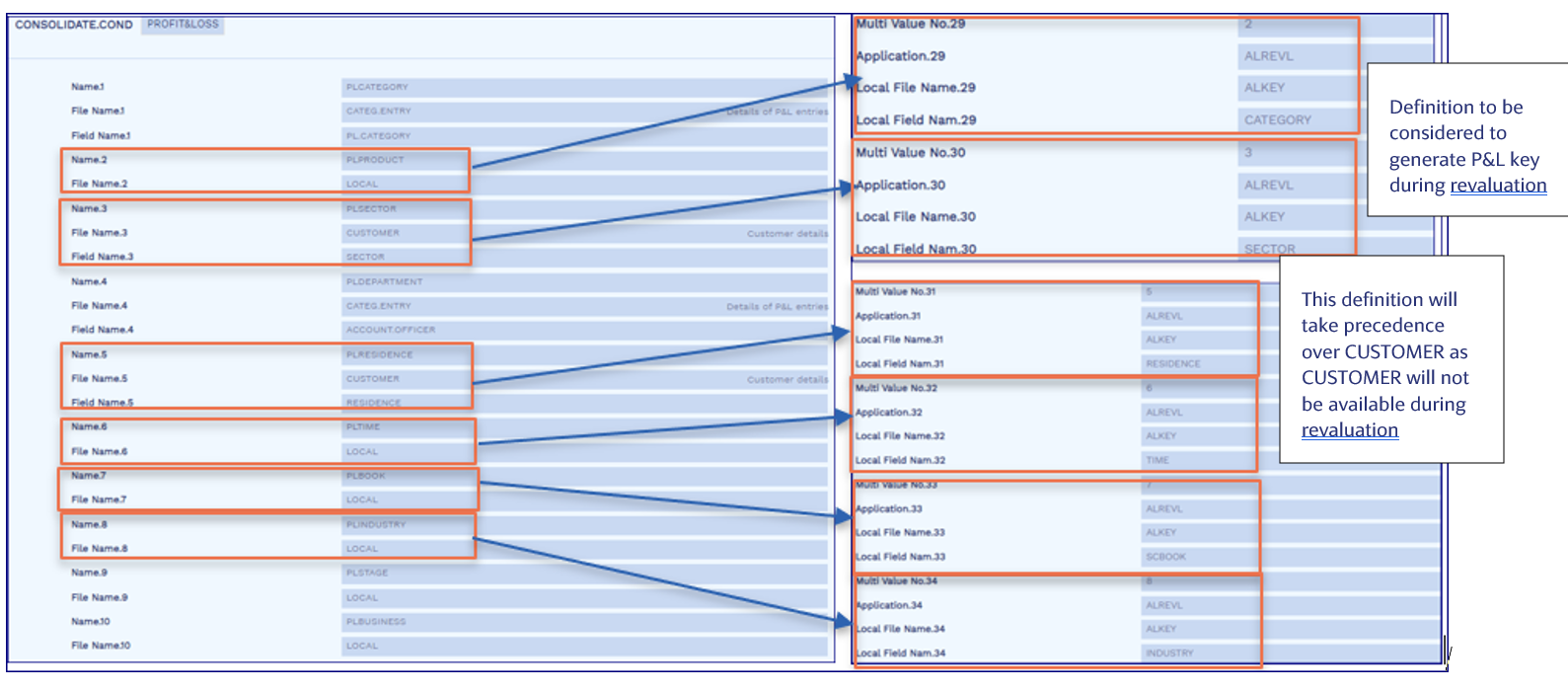
The consolidation PL record can only use the general files, namely CUSTOMER and CATEG.ENTRY, and the local file, AL. The local key components of AL cannot be used to construct the PL key during revaluation, as there is no link to the application file specified in the AL record.
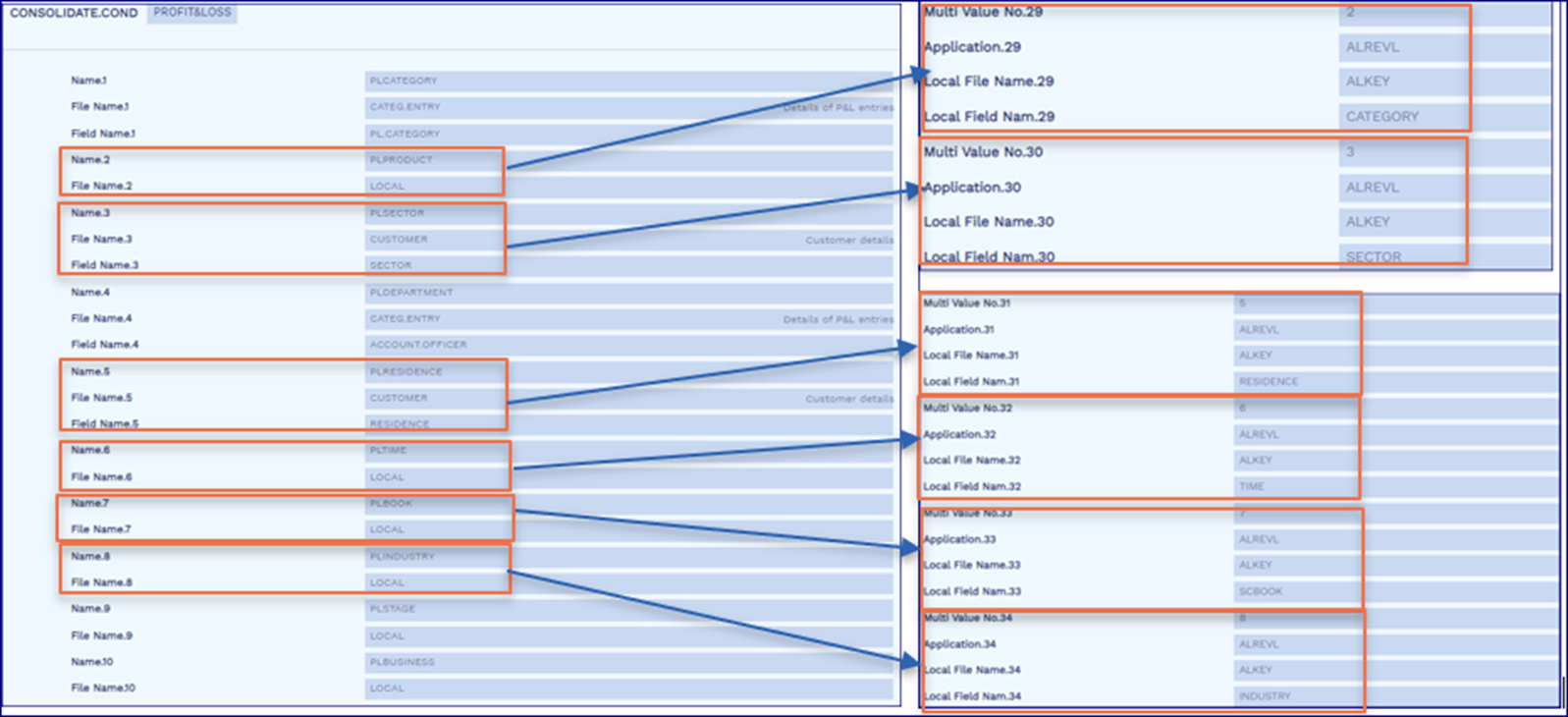
To map the CRF attributes from asset and liability to the PL for the revaluation gain and loss, the ALREVL application and a local file named ALKEY are available in the CONSOLIDATE.COND application for the PL record. For this ALREVLapplication, the only local field names allowed are the fields defined in the AL record.
It is now also possible to specify the local application and local file name when the source for the CRF attribute is set as 'CUSTOMER' in addition to 'LOCAL'.
A sample PL record in CONSOLIDATE.COND with 'ALREVL' is shown below.
 Examples for Posting Profit and Loss with Foreign Currency Asset and Liability Attributes
The revaluation process based on the setup in the Al Reval Gain Loss field in REVALUATION.PARAMETER table is illustrated below:
Revaluation of GBP balances on days “D+1” and “D+2” to USD local equivalent after applying the LCY adjustment amount, and the revaluation profit and loss are explained below. The PL has the attributes of the corresponding asset and liability that is revalued.
The GBP and USD rates are as follows:
- D0 - Apr 25, 1 GBP = 2 USD
- D+1 - Apr 26, 1 GBP = 3 USD
- D+2 - Apr 27, 1GBP = 2.5 USD
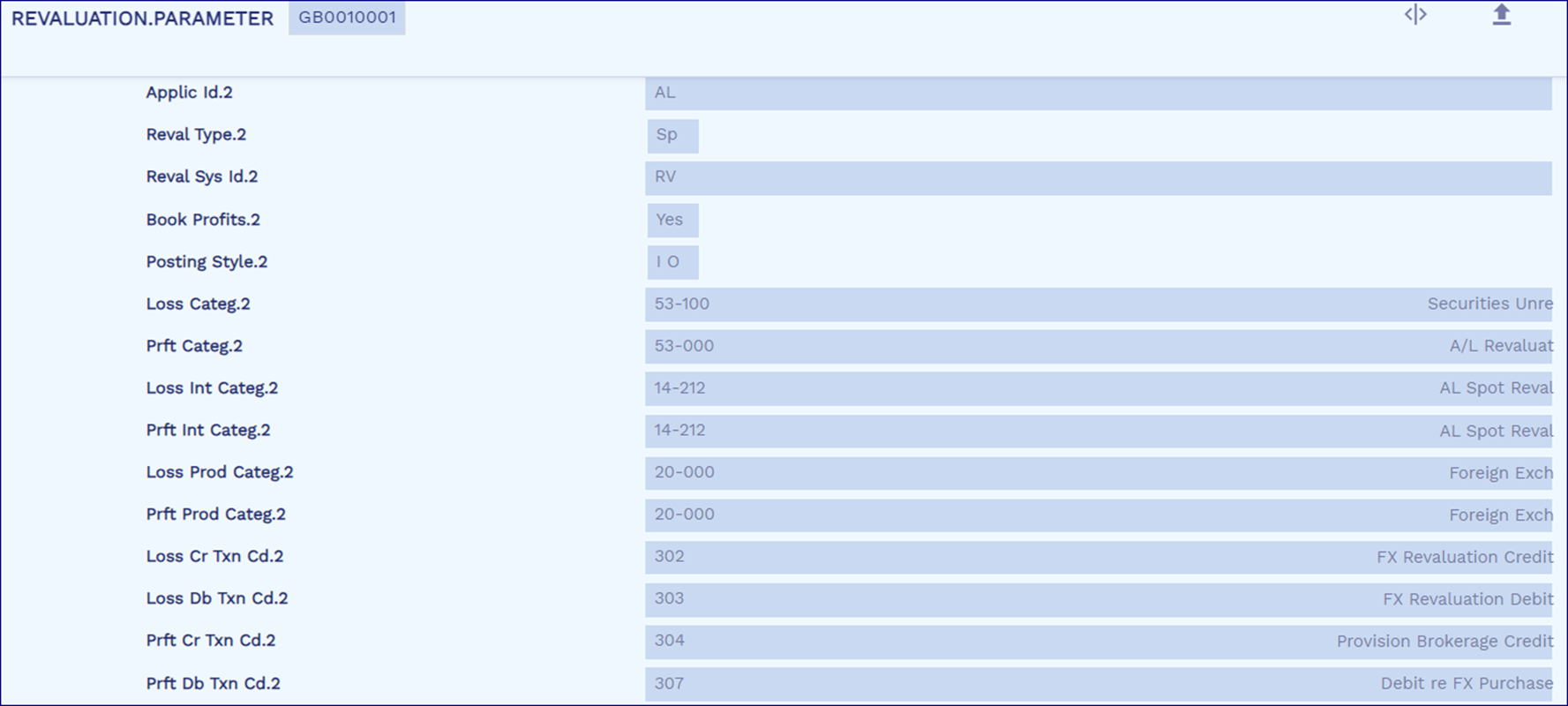
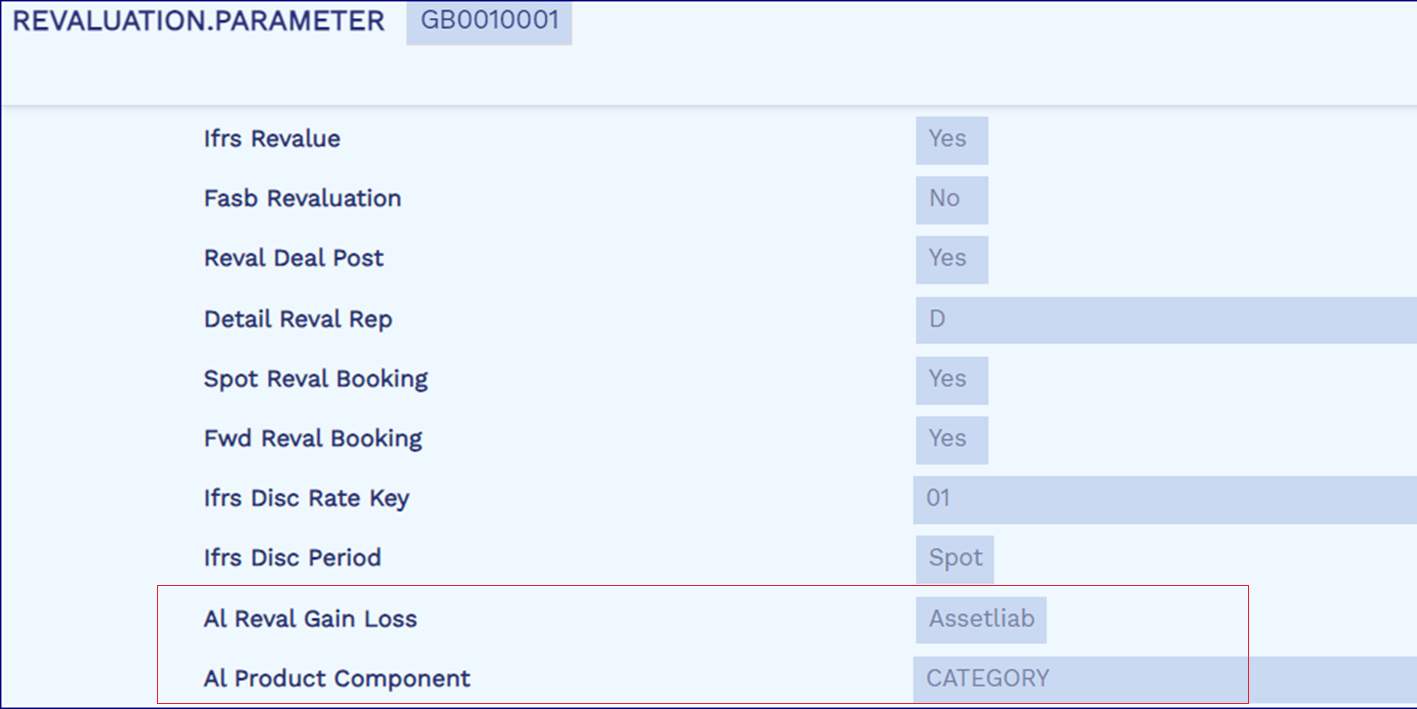
The CONSOLIDATE.COND (PROFIT&LOSS) configuration is as follows:
An Application value 'ALREVL' and a Local File Name named 'ALKEY' are used to map the PL key components using the attributes of the asset and liability.
For 'ALREVL', the local field names allowed are only the fields defined in the ASSET&LIABILITY record.
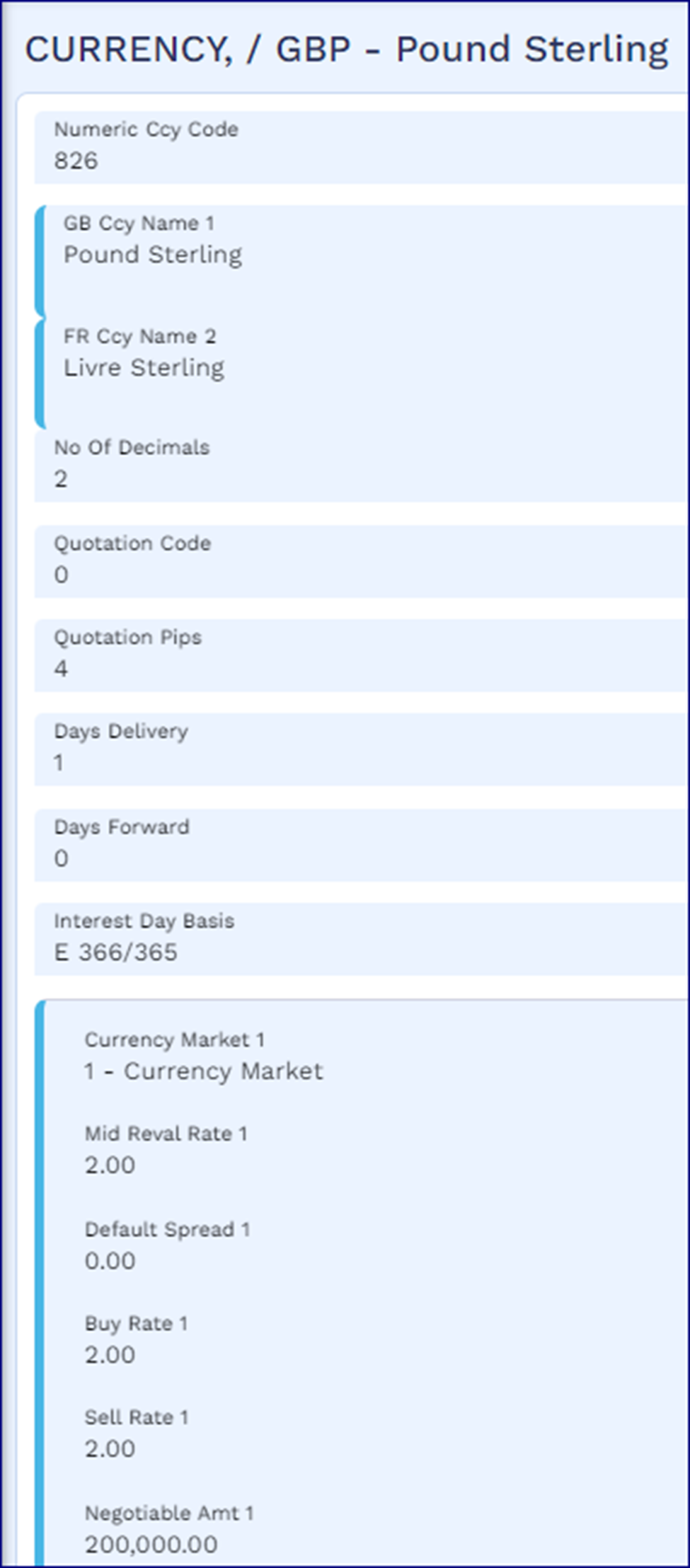
- View of Currency - GBP
- 1 GBP = 2 USD
Two cross-currency FT transactions GBP and USD on Apr 25, 2023 are shown below:
- Transaction 1 – Credit 5000 to the FCY Account 1 with currency GBP (LCY equivalent – 10000)

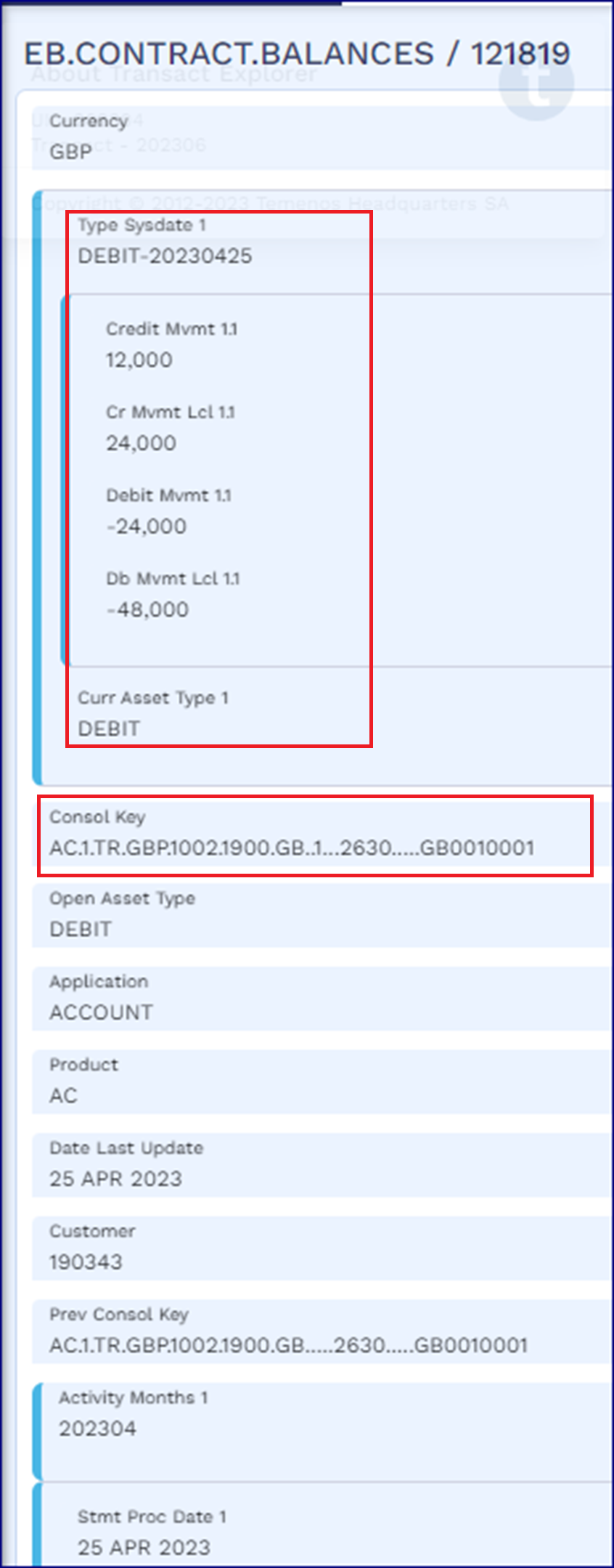
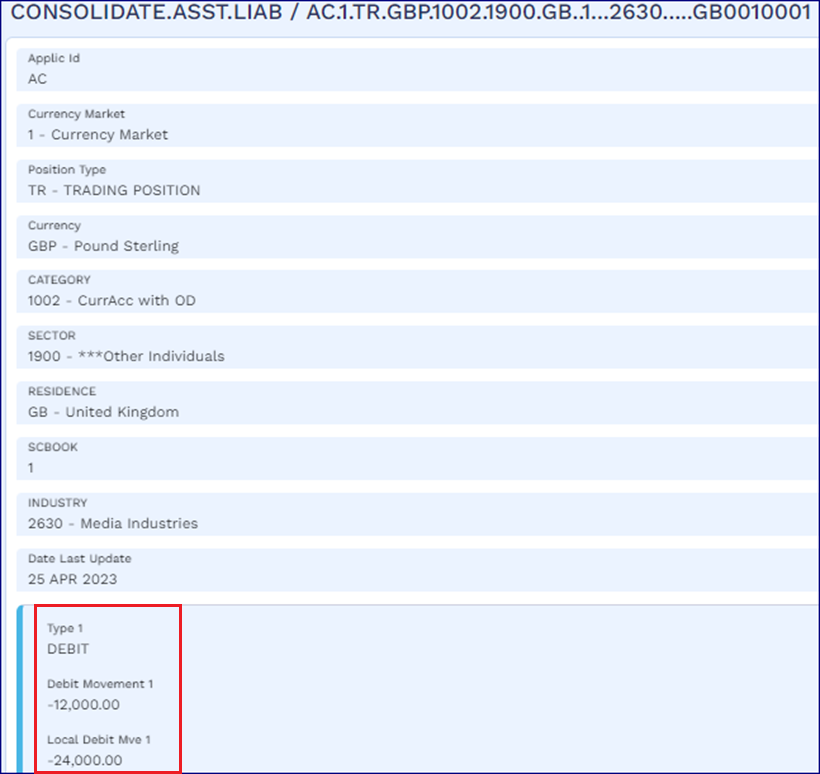
- Transaction 2 – Debit 12000 from the FCY Account 2 with currency GBP (LCY equivalent – 24000)
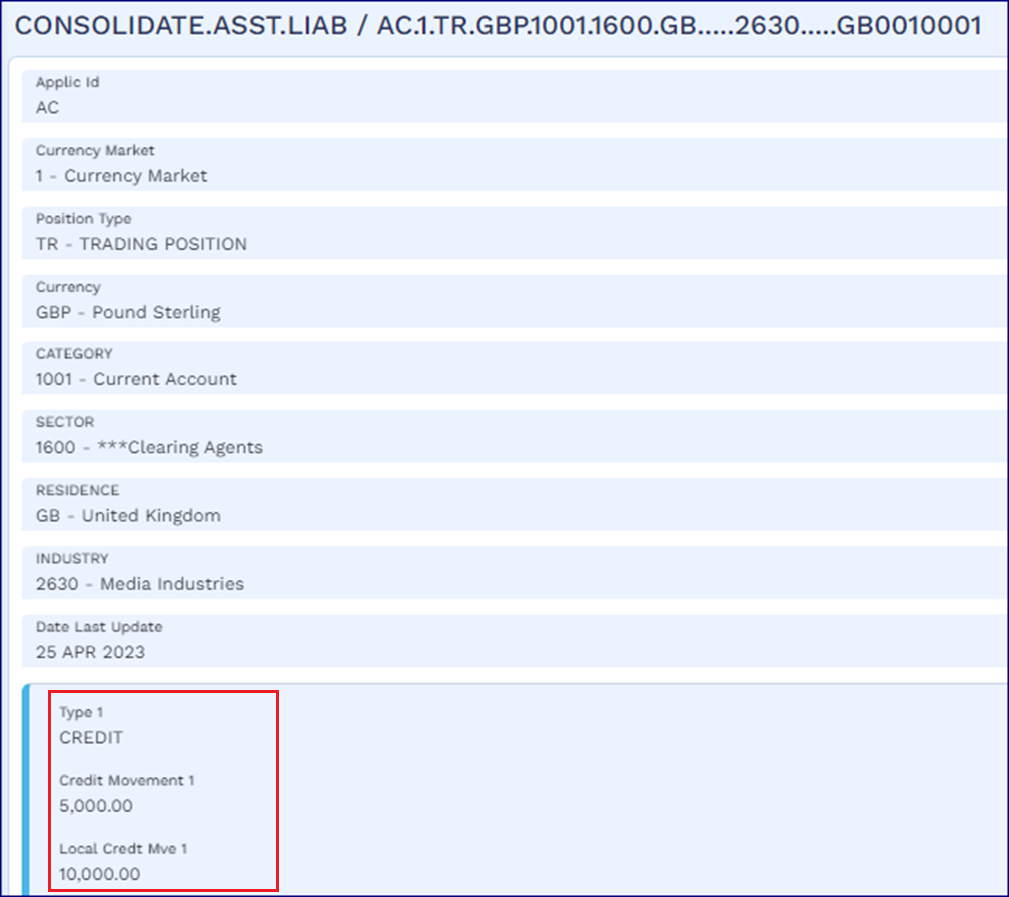
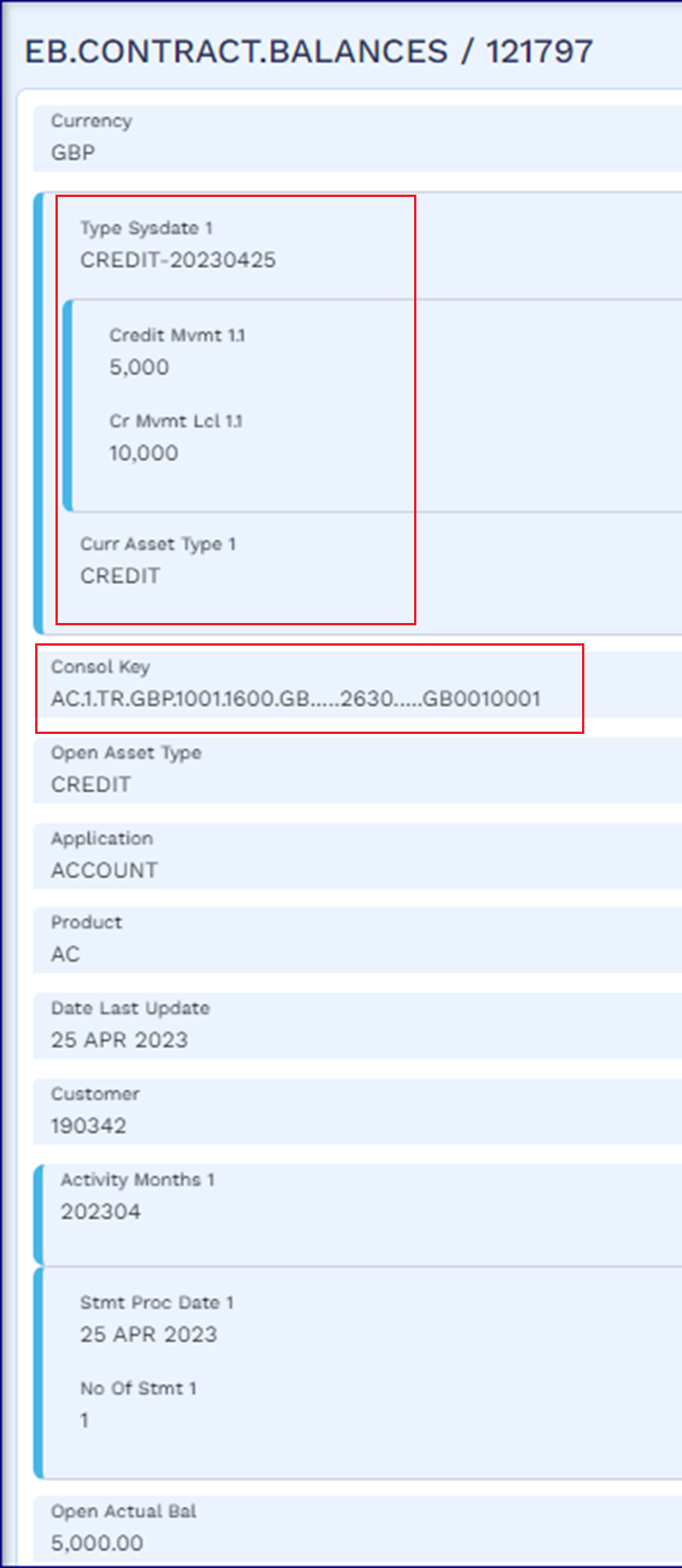
Scenario 1 - FCY CAL
After COB on Apr 25, the FCY Account 1 with currency GBP (CREDIT Asset Type) and the CAL record are shown below.
FCY Account 2 with currency GBP (DEBIT Asset Type) and CAL record are shown below.
Scenario 2 - POSITION
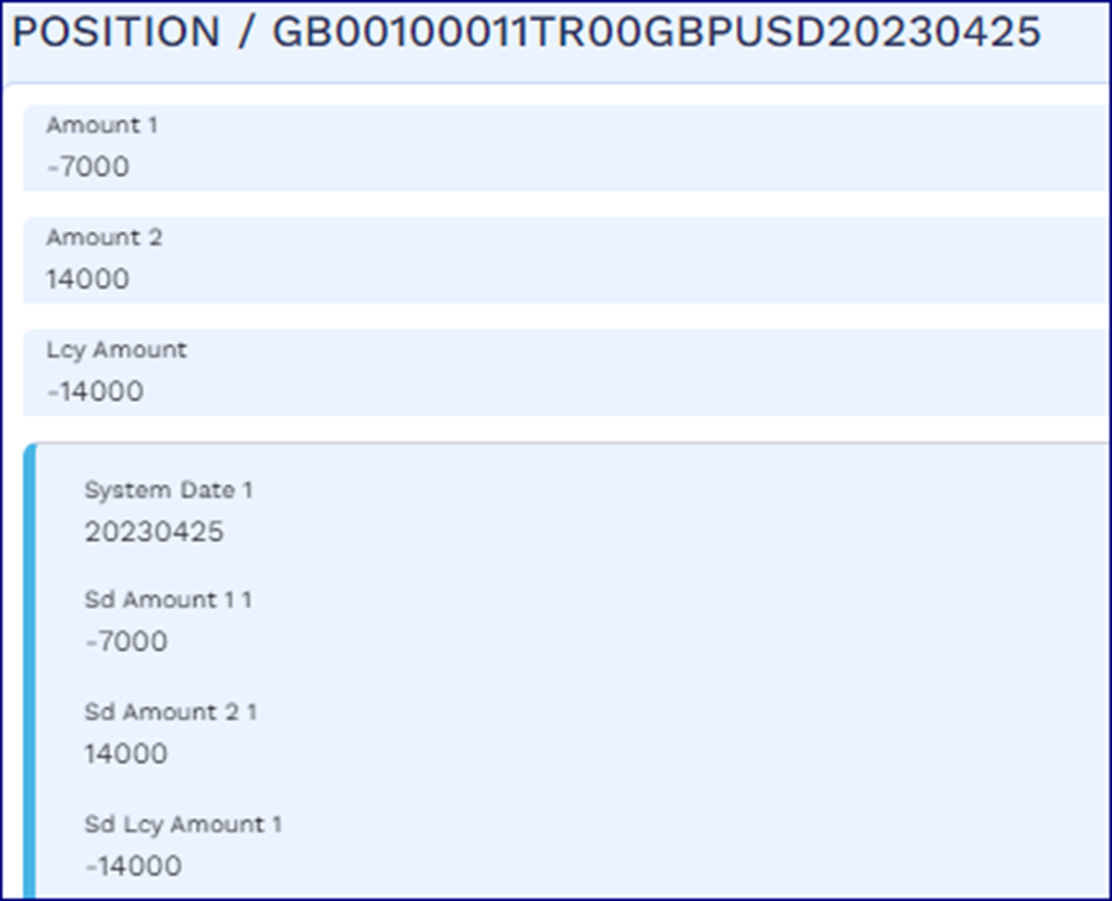
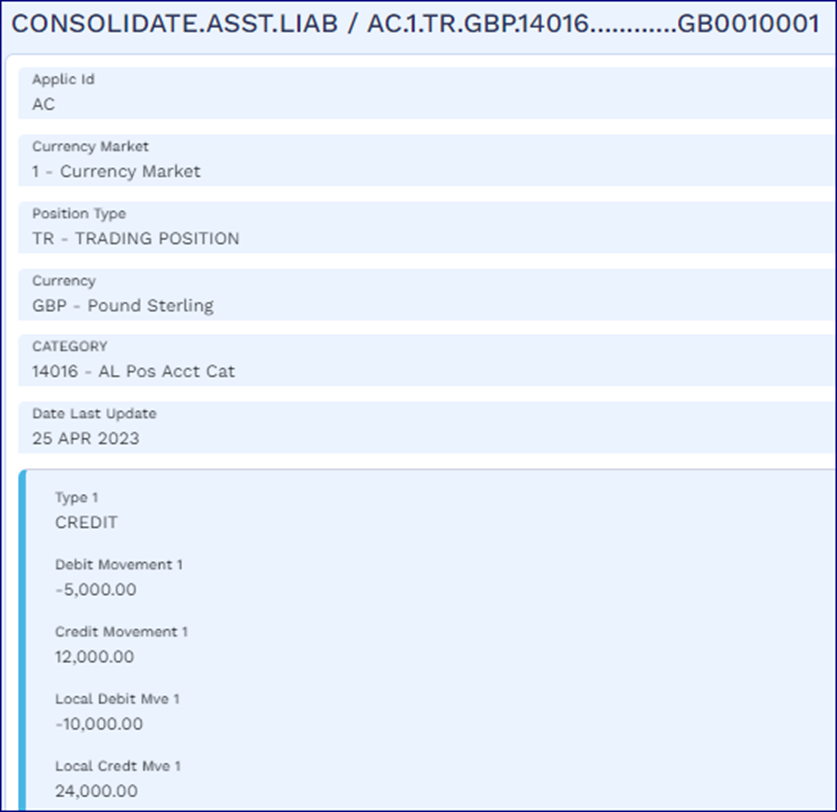
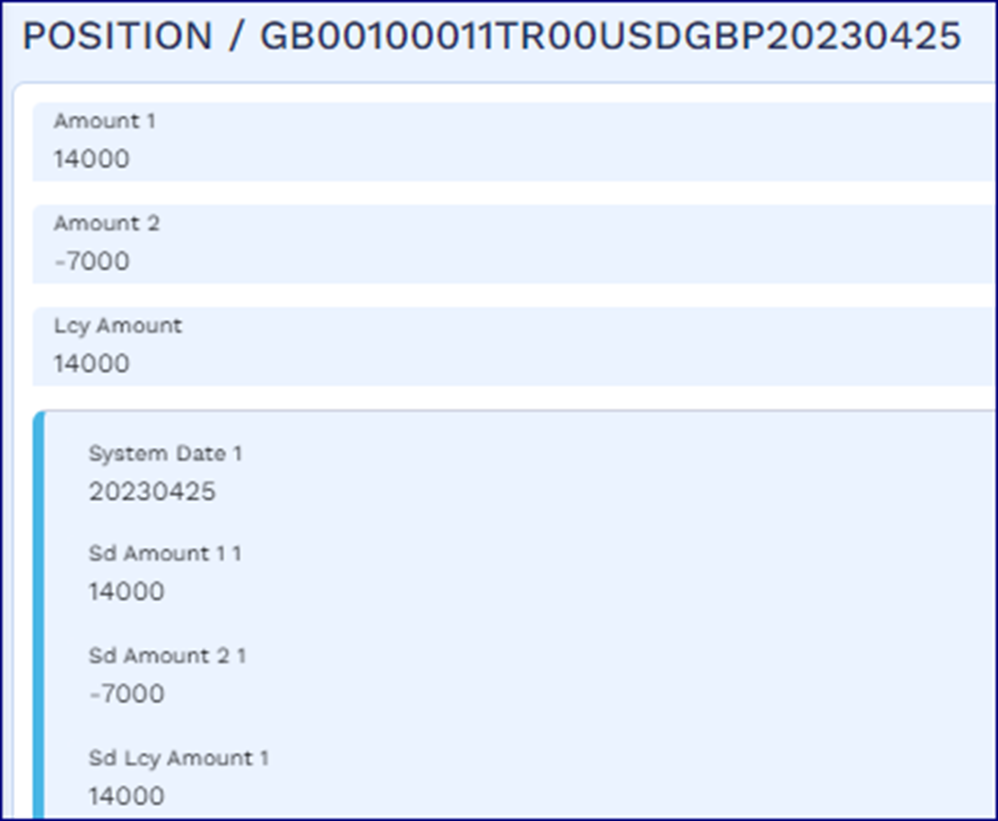
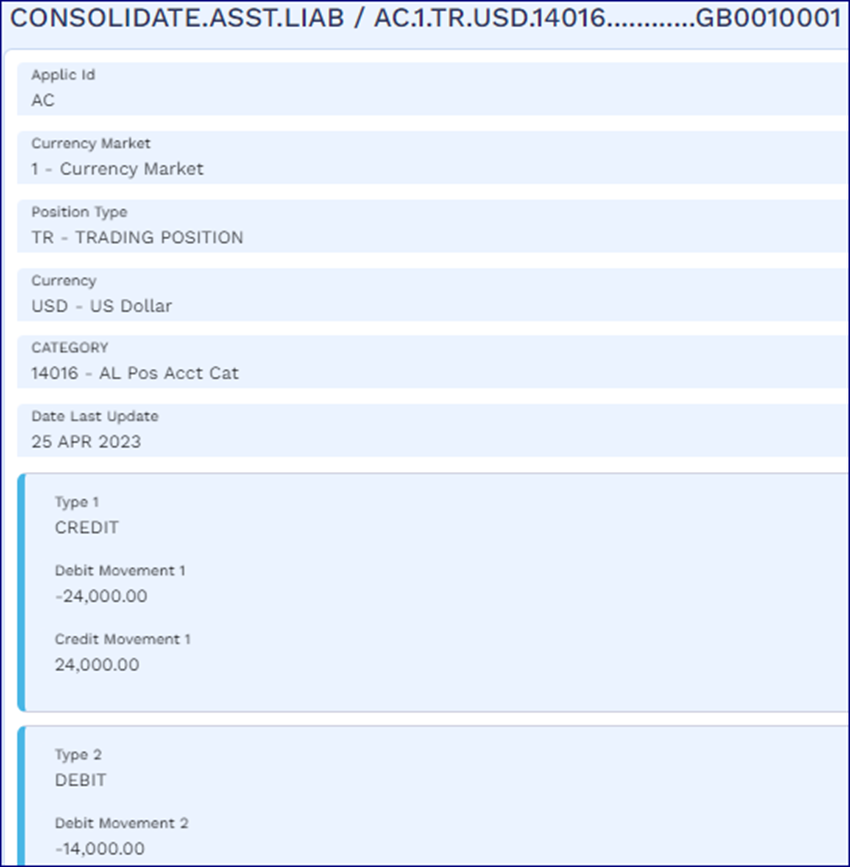
The POSITION table and CONSOLIDATE.ASST.LIAB for the position accounts are shown below.
POSITION – GBPUSD and CAL for Position Account - GBPUSD
POSITION - USDGBP and CAL for Position Account - USDGBP
When the user changes the exchange rate on
- D+1 (Apr 26),
- 1 GBP = 3 USD
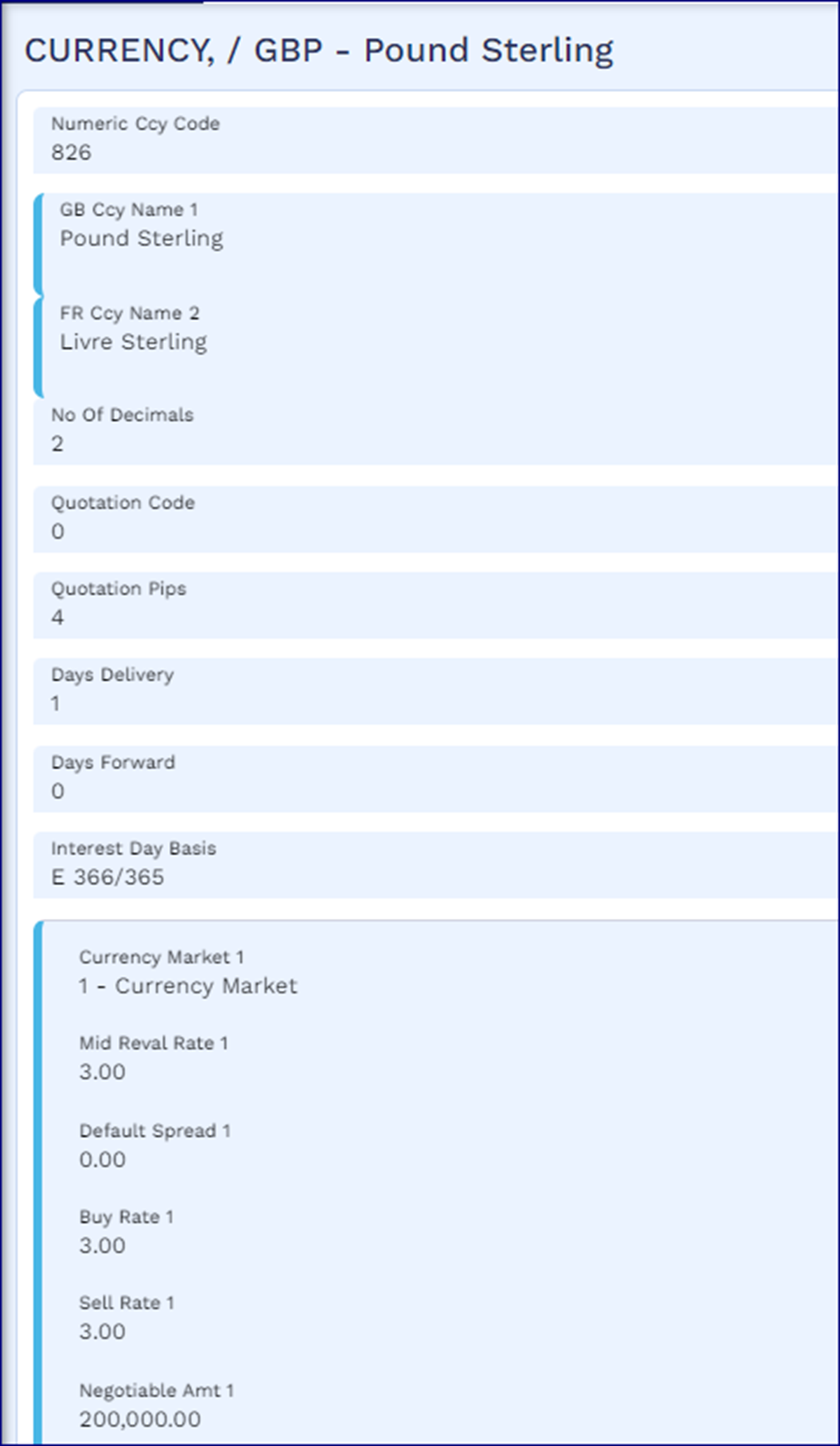
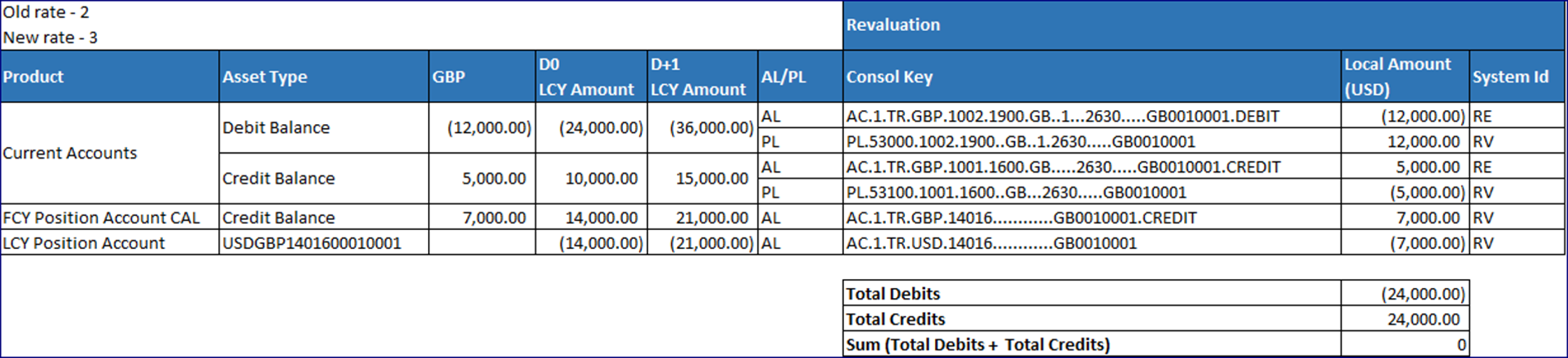
After COB on Apr 26, the GBP/USD rates are calculated as:
- D0: 1 GBP = 2 USD (Apr 25)
- D+1: 1 GBP = 3 USD (Apr 26)
Scenario 1 - CAL Revaluation
In this scenario, revaluation of FCY CAL - AC.1.TR.GBP.1002.1900.GB..1...2630.....GB0010001.DEBIT is calculated as shown in the below screenshot.
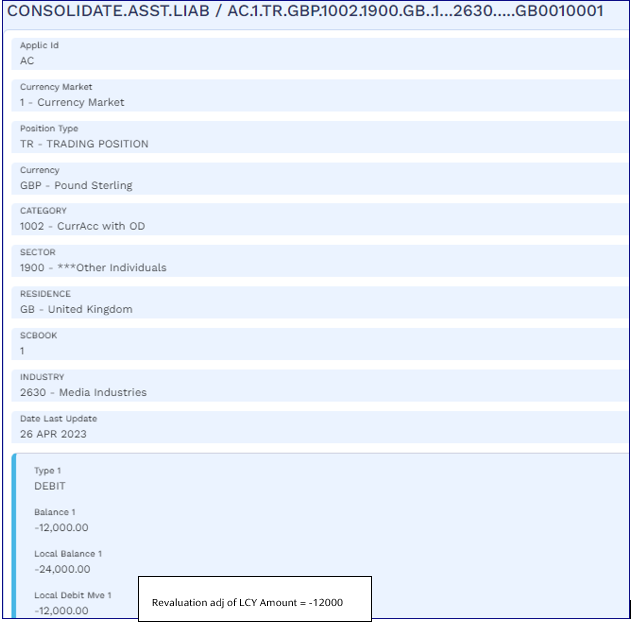
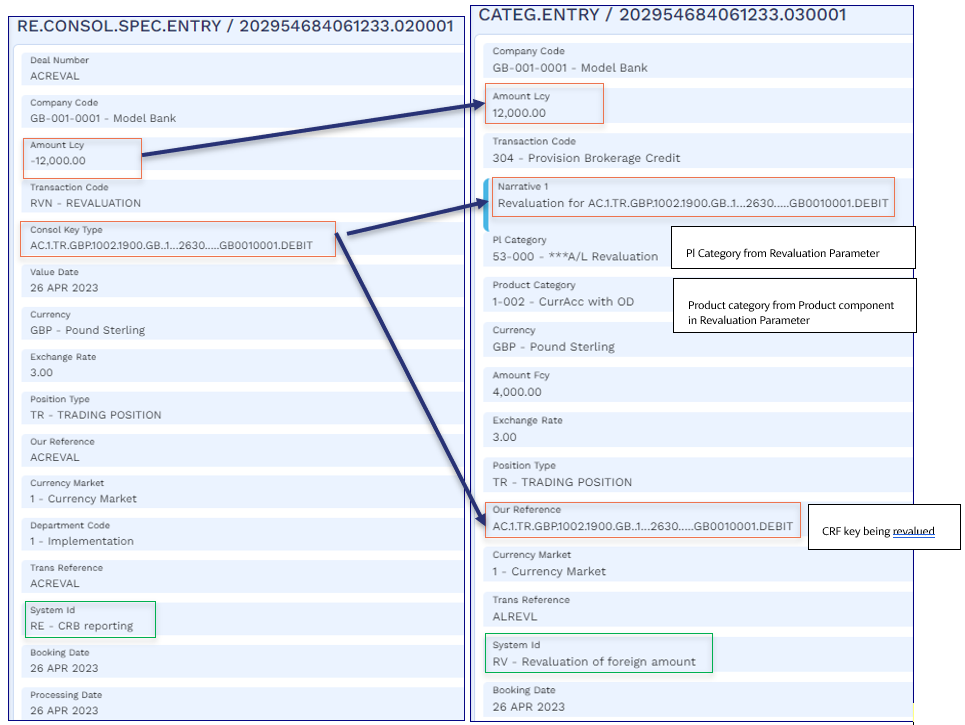
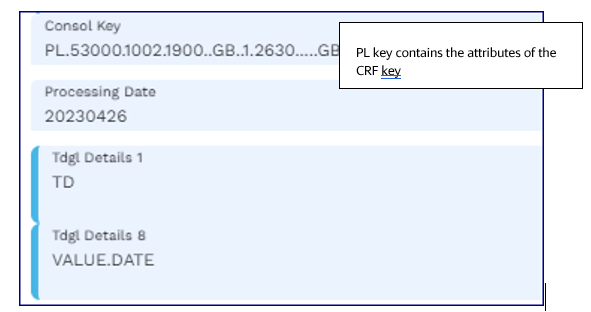
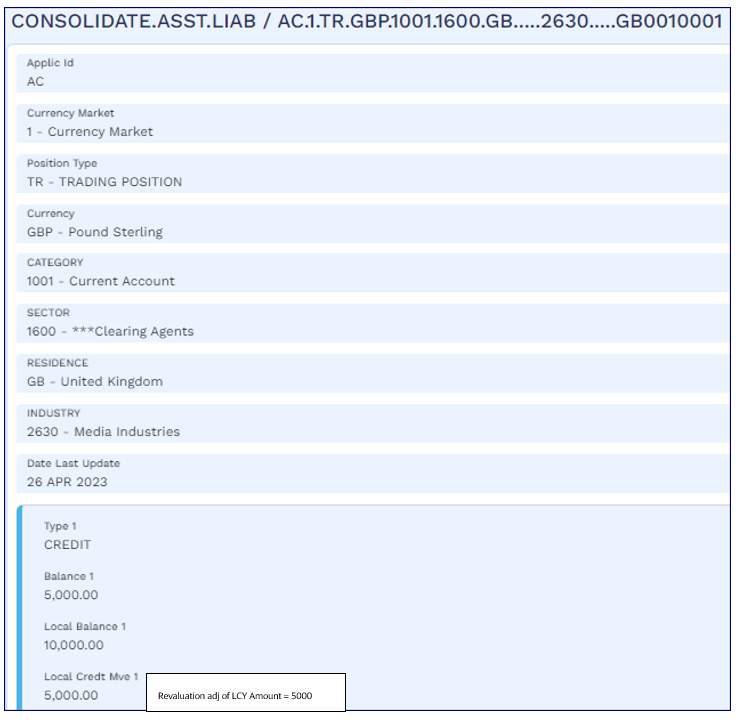
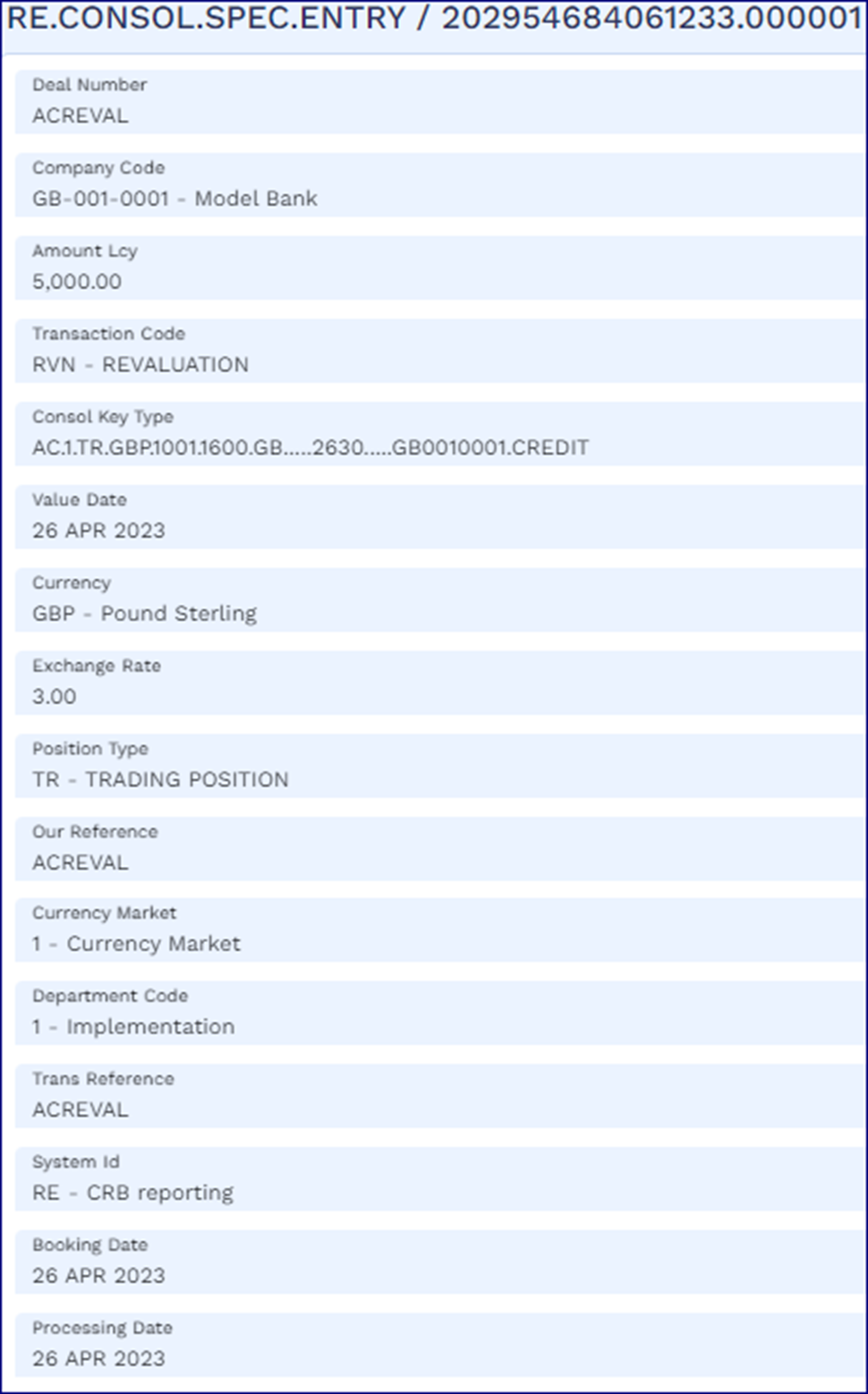
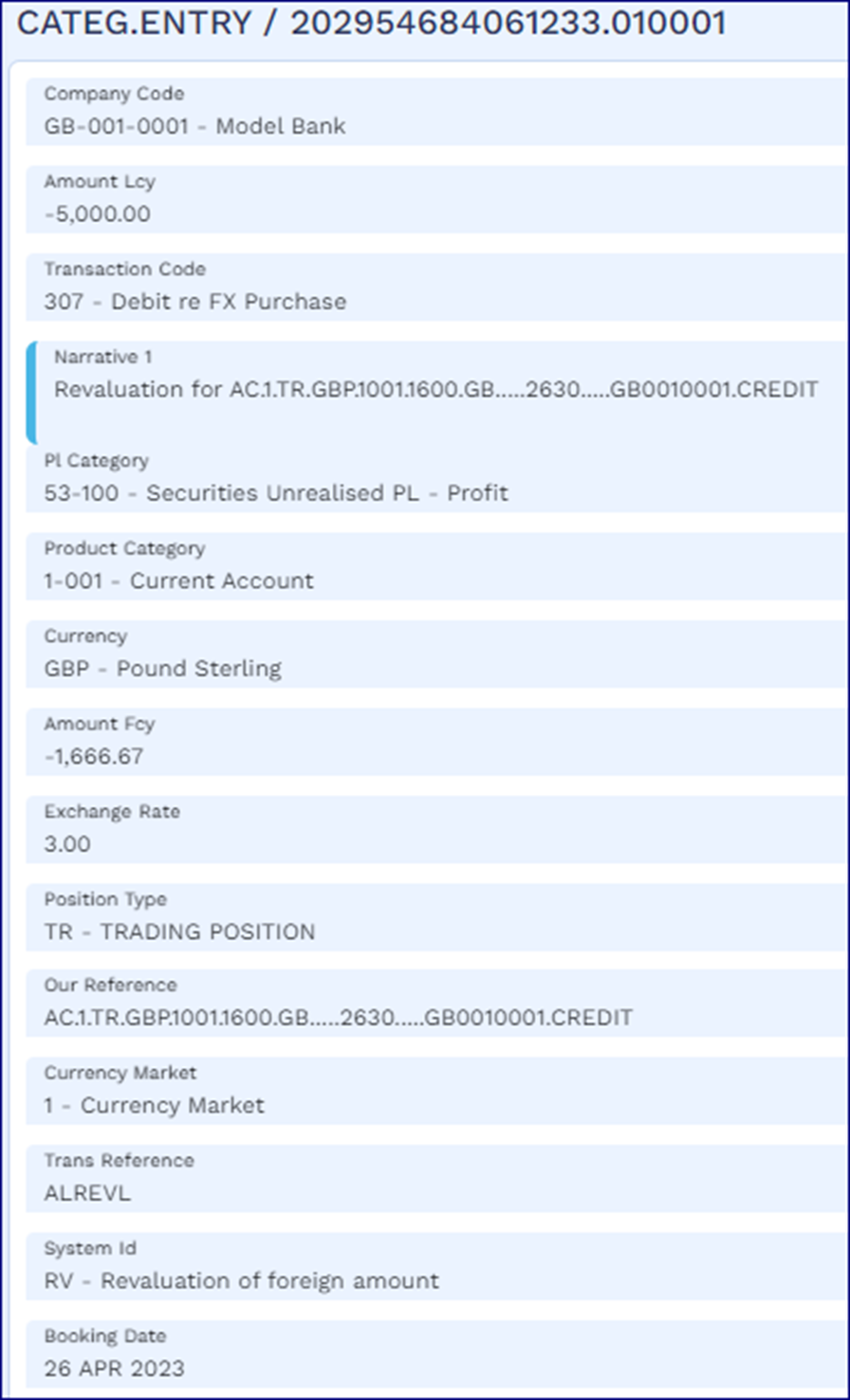
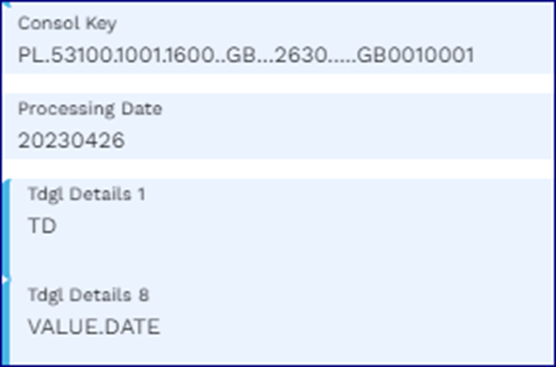
Revaluation of FCY CAL - AC.1.TR.GBP.1001.1600.GB.....2630.....GB0010001.CREDIT is shown in the below screenshot.
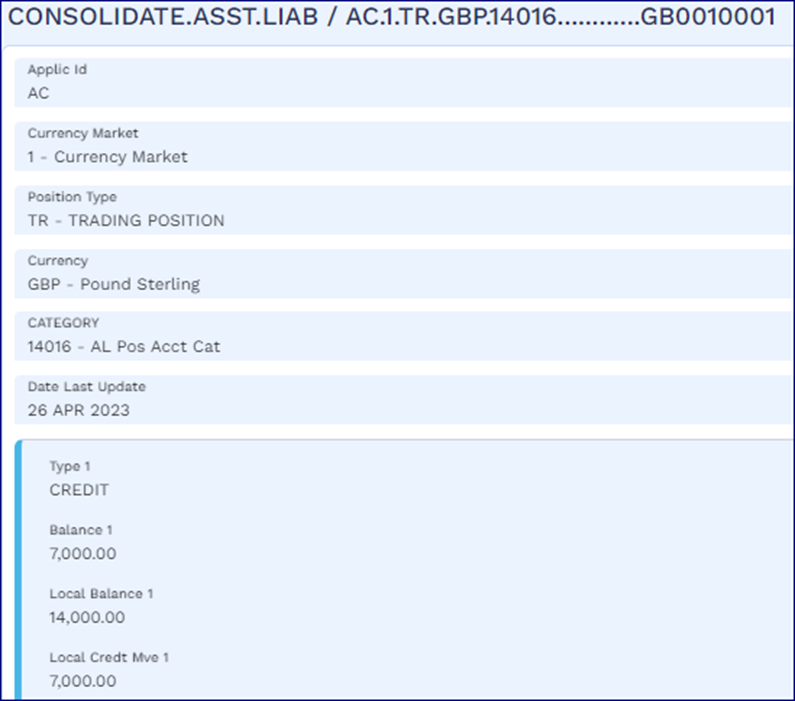
Revaluation of FCY CAL for Position Account (No PL Entry) is shown in the below screenshot.
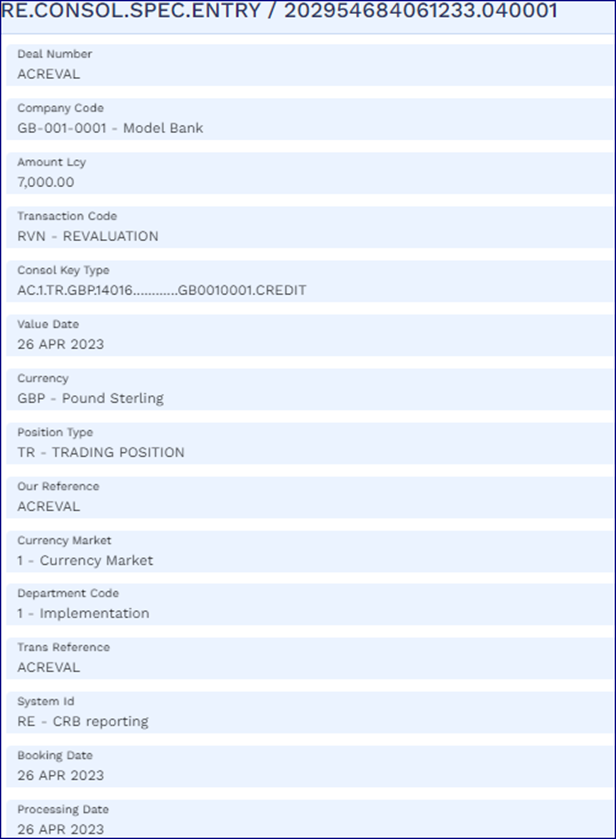
CPL records created with CRF attributes are shown in the below screenshot.
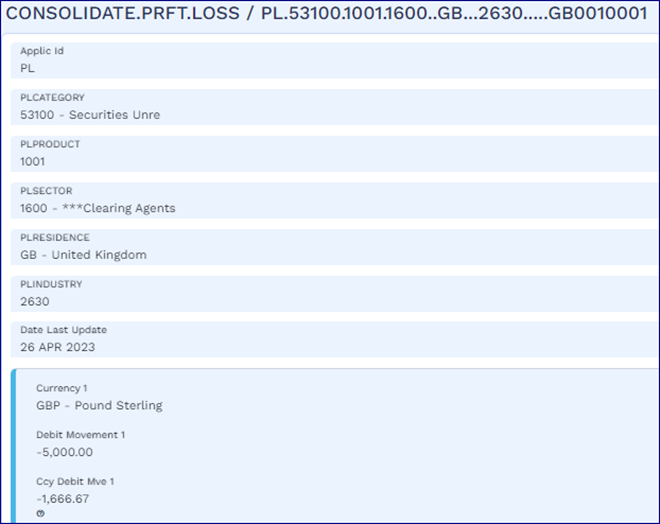
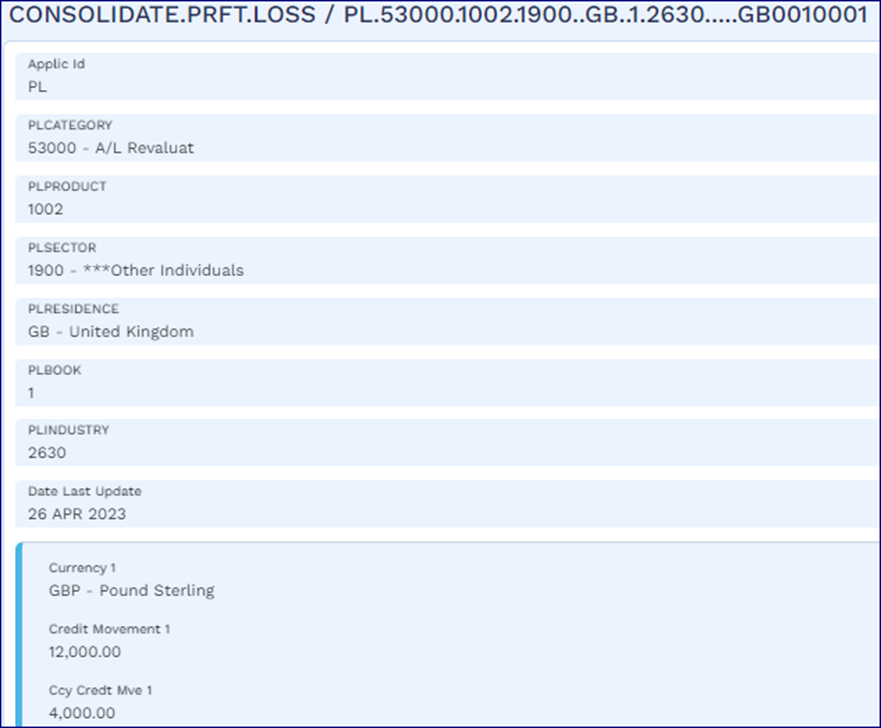 Scenario 2 - POSITION Revaluation
In this scenario, the POSITION table is updated with LCYequivalent amount as shown below.
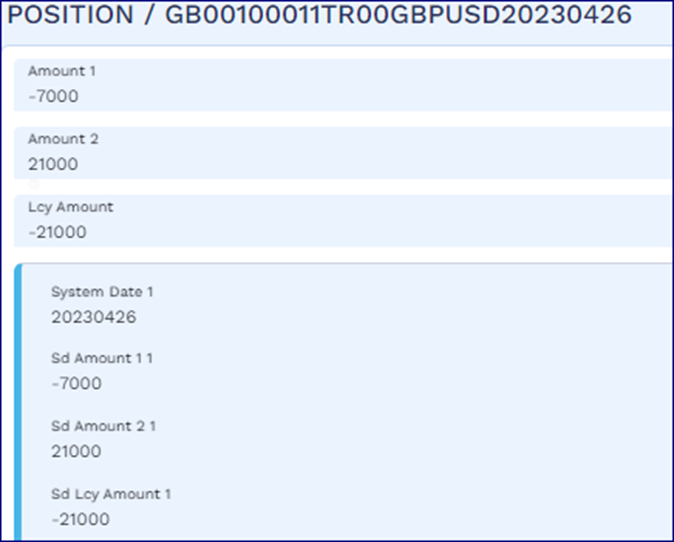
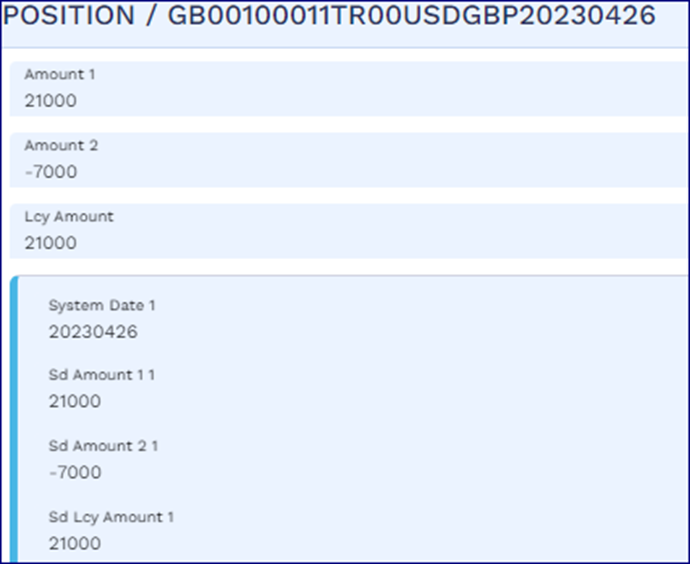
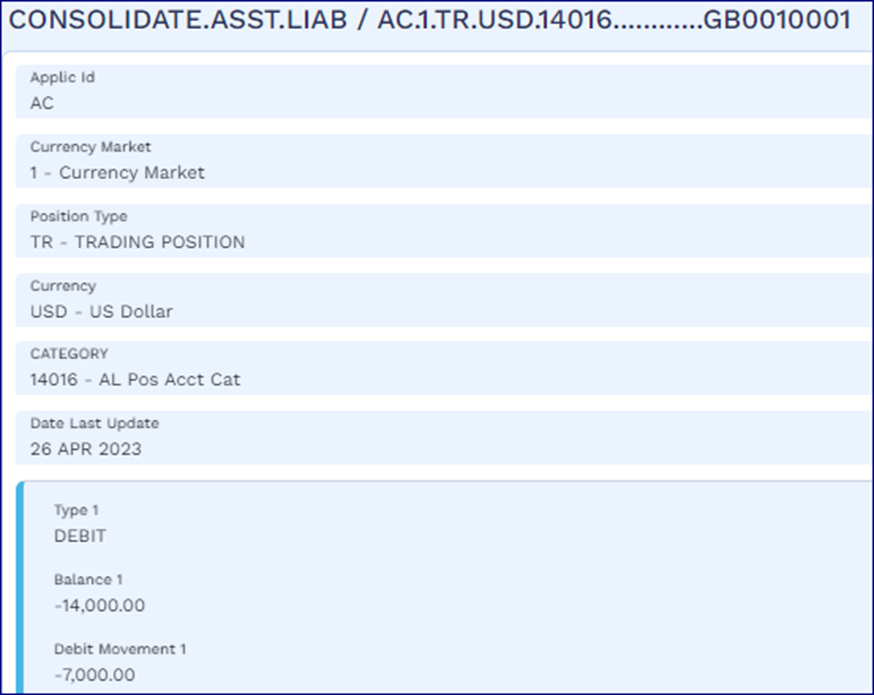
LCY Position CAL is as shown below.
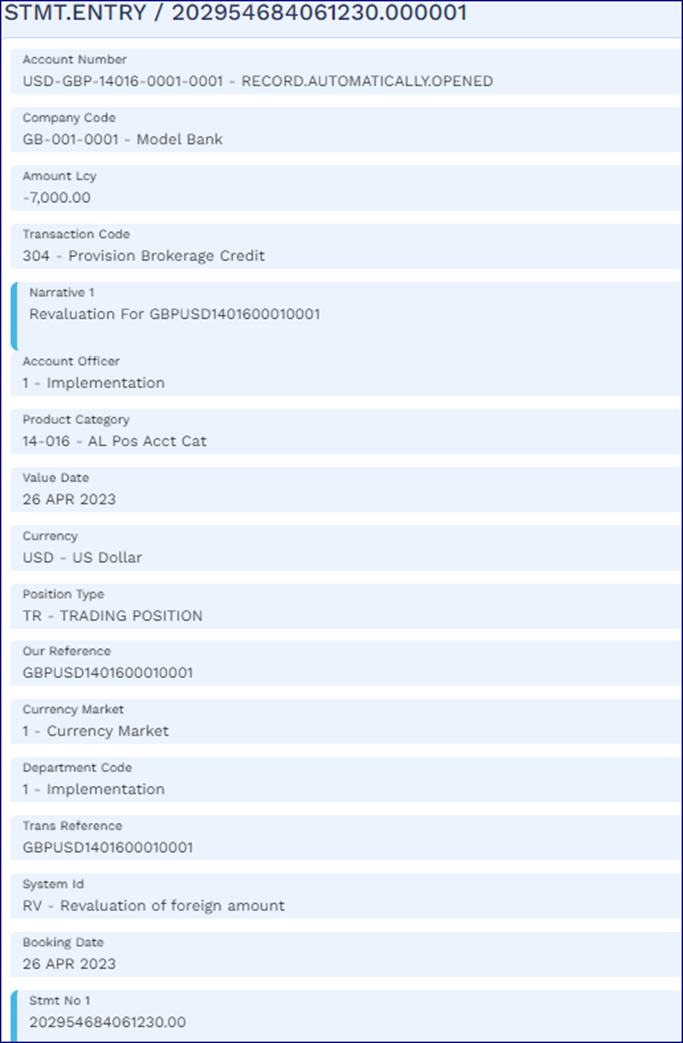
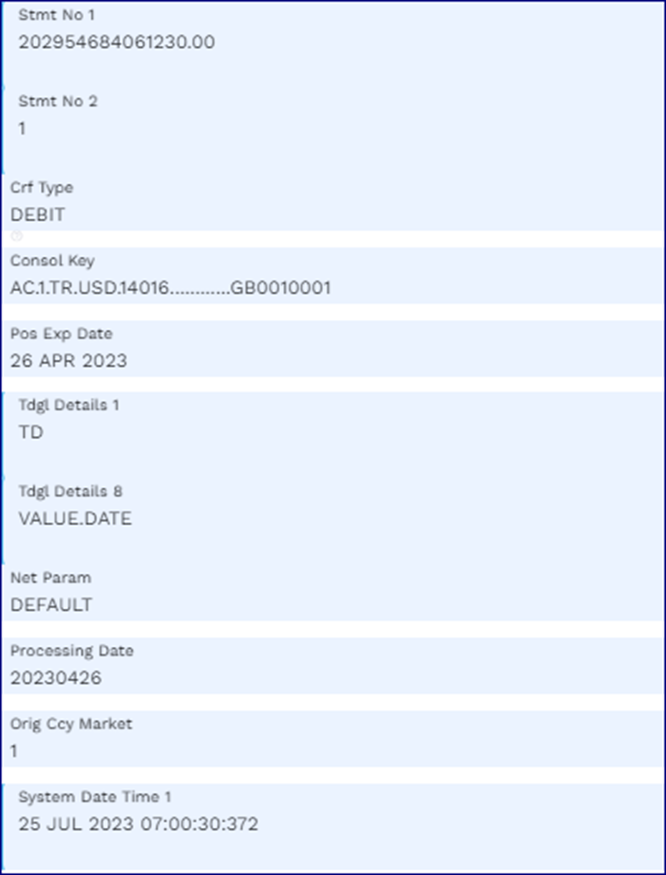
Position revaluation results in a STMT.ENTRY for LCY position account.
 Scenario 3 - Balancing Post Revaluation System
In this scenario, the transaction journal post is revaluated and balanced as shown below.
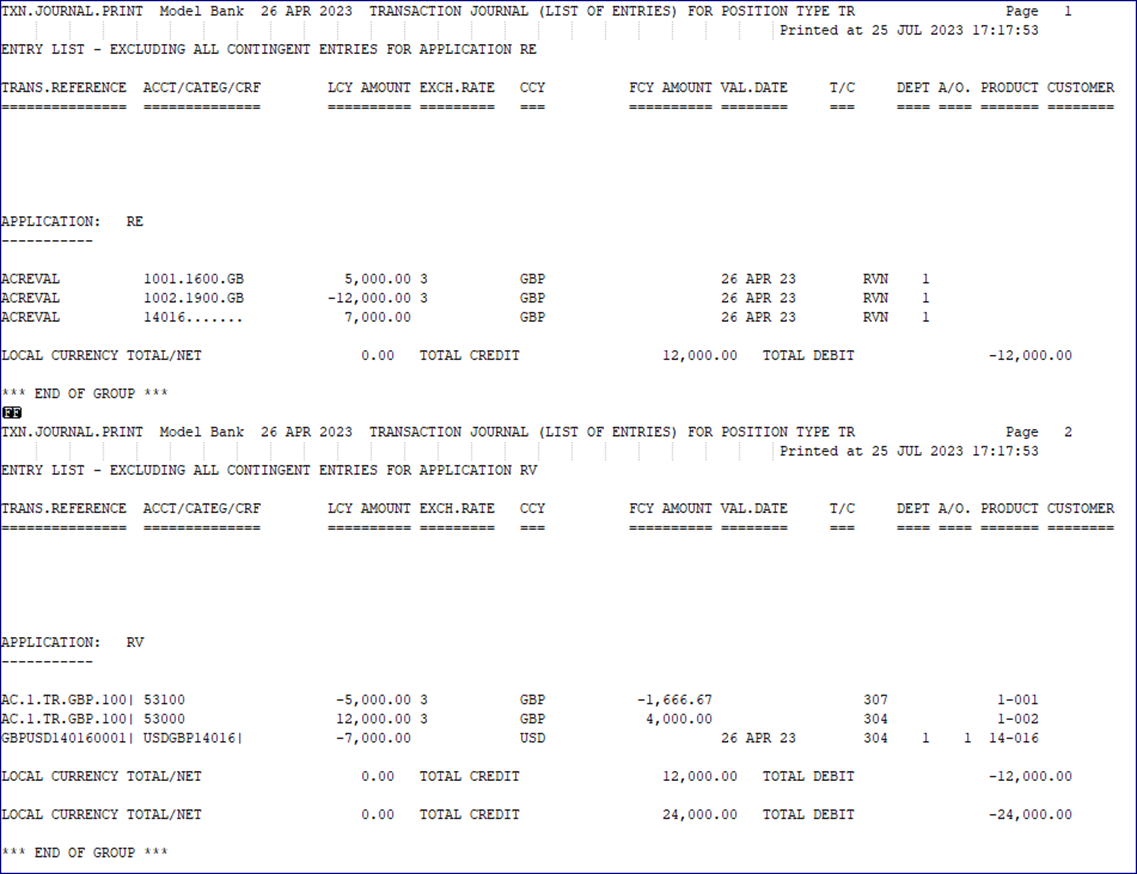
Post revaluation, the system is balanced (by currency) as shown below.
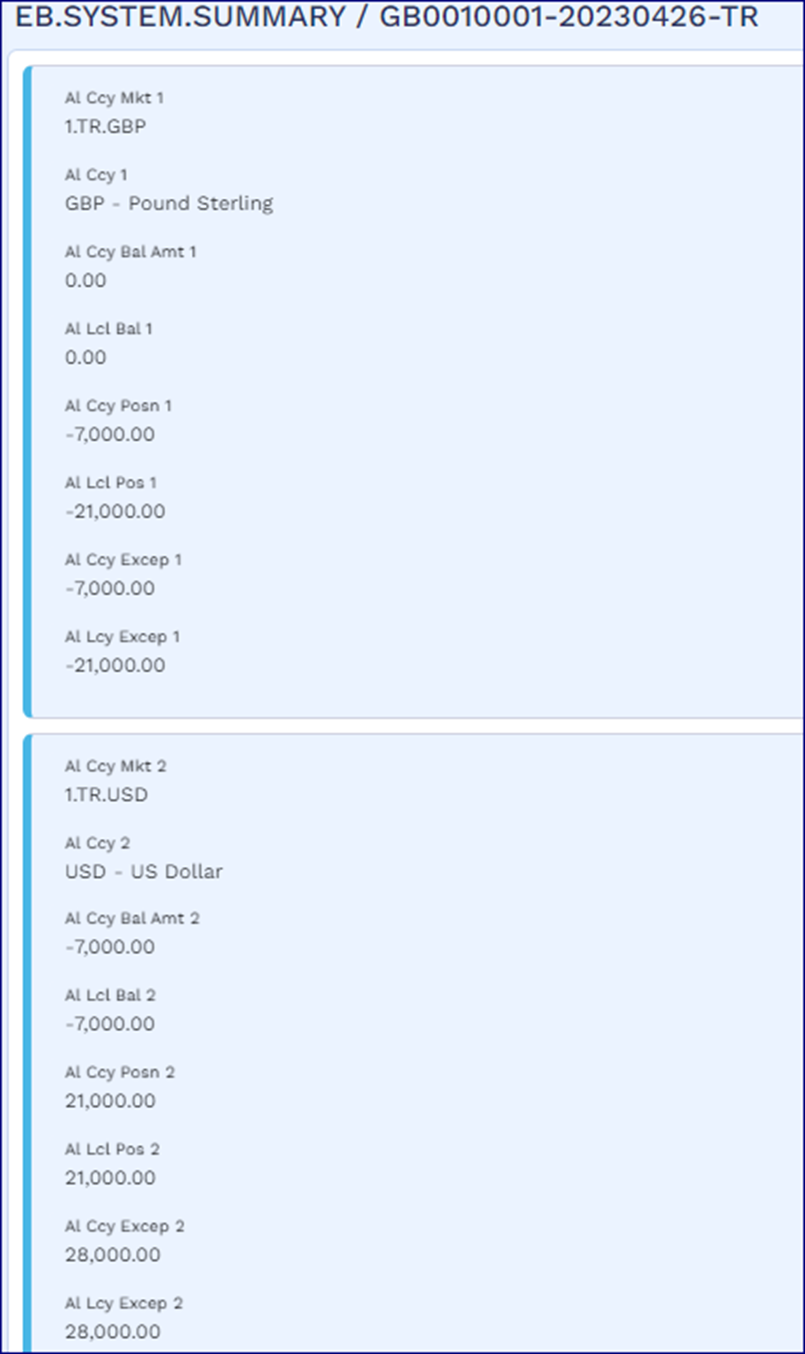
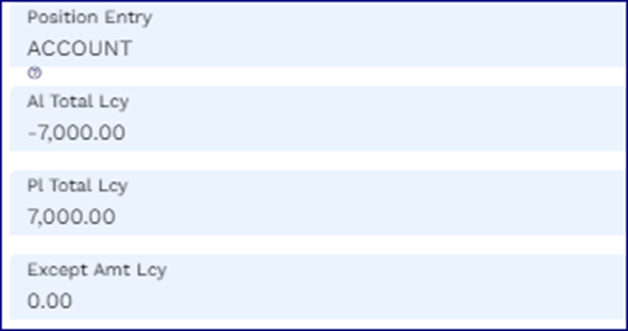
Post revaluation, the system is balanced (by System ID) as shown below.
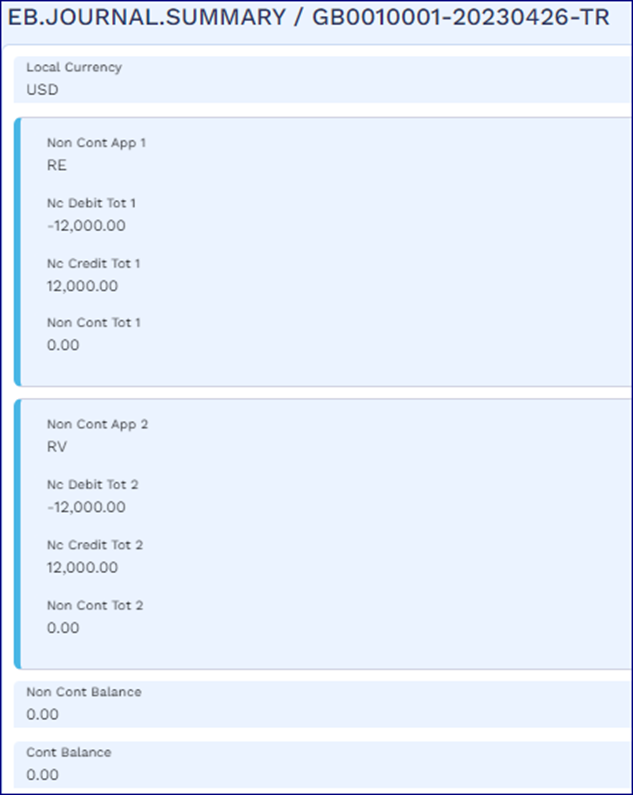
Post revaluation, the system is balanced (by System ID) as shown below.
In this topic