Configuring Automatic Defaulting of FX Margin
This feature requires the user to define certain conditions, such as Residence and Sector from CUSTOMER table and/or Investment Program in SEC.ACC.MASTER (SAM), based on which the customers or portfolios are identified into several groups and a margin percentage deal-type-wise for each group defined. Additionally, it has provision to define the margin percentage for customer or portfolio-wise. The existing framework of CONDITION.PRIORITY,FX.GEN.CONDITION and FX.GROUP.CONDITION functionalities are extended to cater to FX margin.
CUSTOMER and SEC.ACC.MASTER.
This also enables the user to include a local reference field.
When a new CUSTOMER record is created, the system updates the Group ID in CUSTOMER.CHARGE table. Similarly, when a new SAM is created for a customer, the system updates the applicable Group ID in it. At the FX application level, the reference is first made to SAM using the portfolio number (if available). Else, reference is made to CUSTOMER.CHARGE table to default the Group ID.
In the absence of a SAM, the system refers to the CUSTOMER.CHARGE table and defaults the same on FX deal template based on which the margin percentage is applied.
CONDITION.PRIORITY
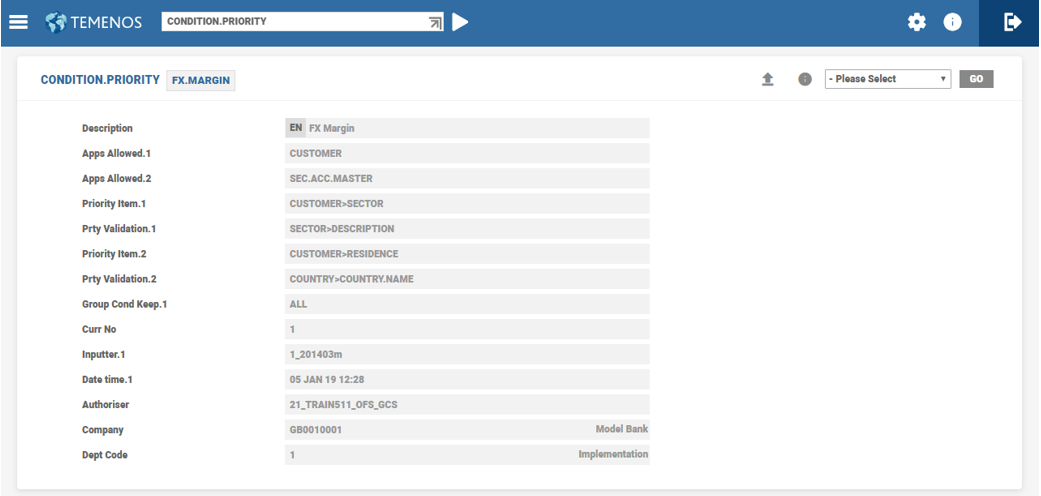
This specifies (for certain applications) which data elements in other reference applications can be defined to determine condition groups. FX margin functionality allows two applications: CUSTOMER and SEC.ACC.MASTER. The record ID is FX.MARGIN, which is shown below:
FX.GEN.CONDITION
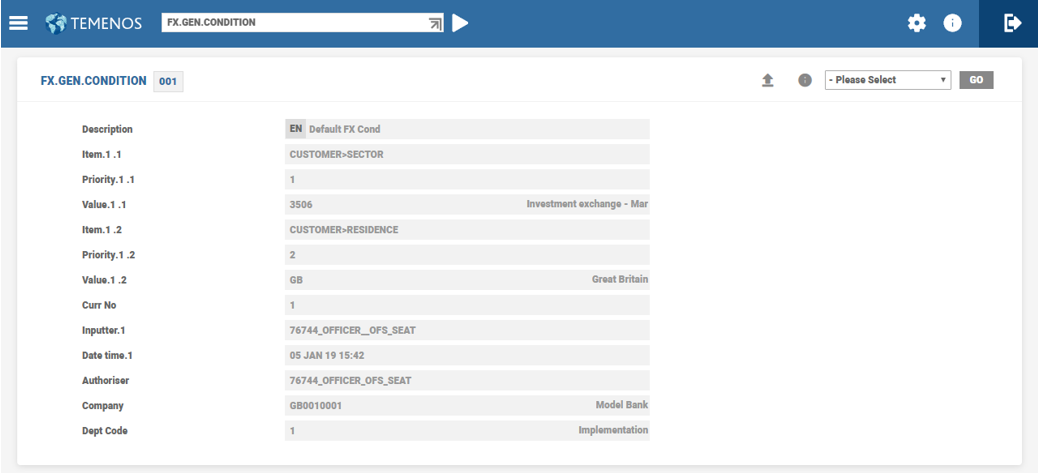
This provides the parameters to calculate the default groups for applying FX margin. The priority data items used in the FX.GEN.CONDITION table defaults from the FX.MARGIN record in the CONDITION.PRIORITY table.
FX.GROUP.CONDITION
This defines the FX margin percentage specific to particular or group of customers according to FX.GEN.CONDITION table ID. The margin defined is deal-type-wise and has a provision to either mention a certain percentage or link it to an FX.COMM.GROUP table ID. There can be two types of records: Customer Specific (C-< Customer ID>) and Group ID (same ID given in FX.GEN.CONDITION).
 Example
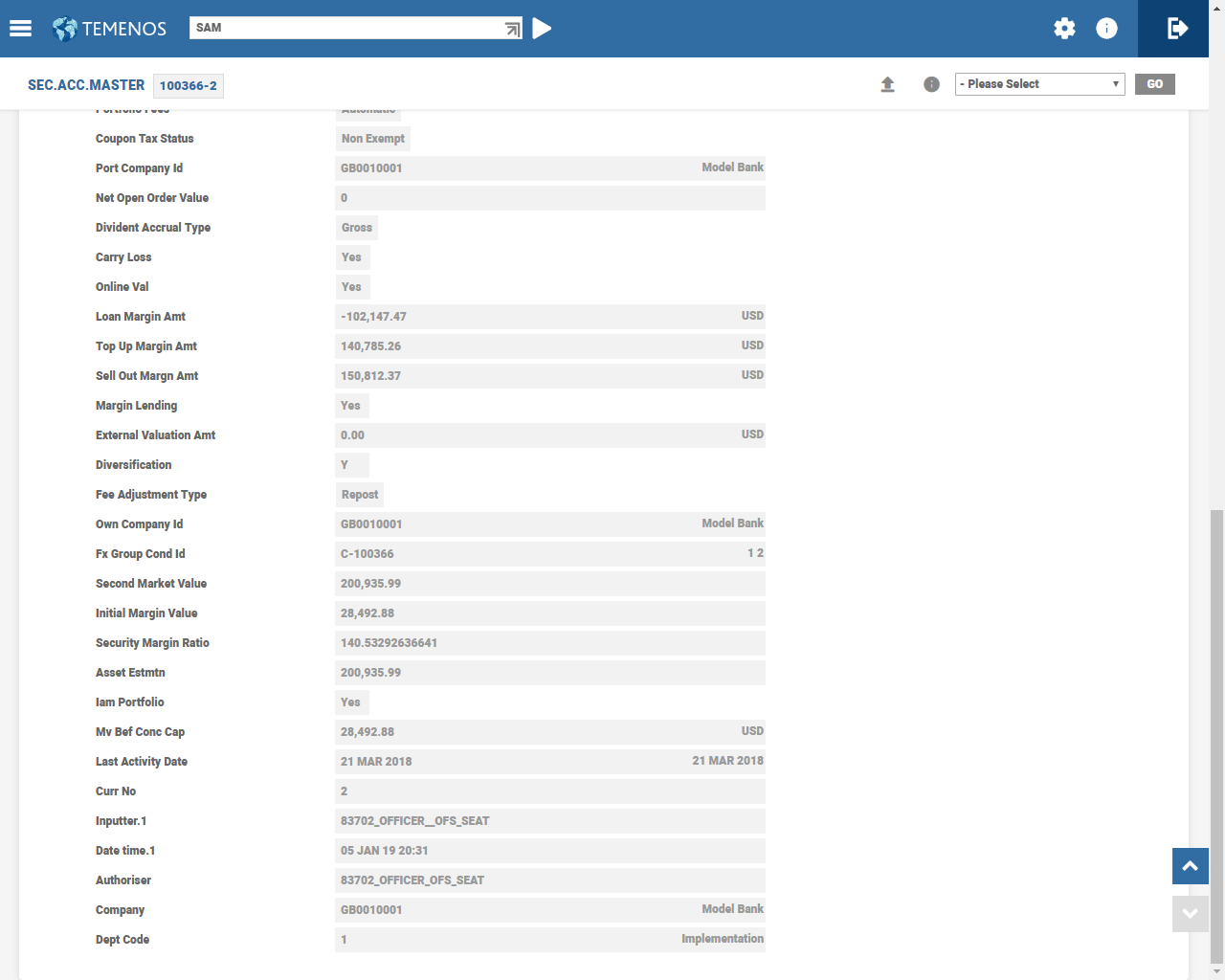
Following is a sample record with customer specific margin percentage with one or more portfolio IDs:
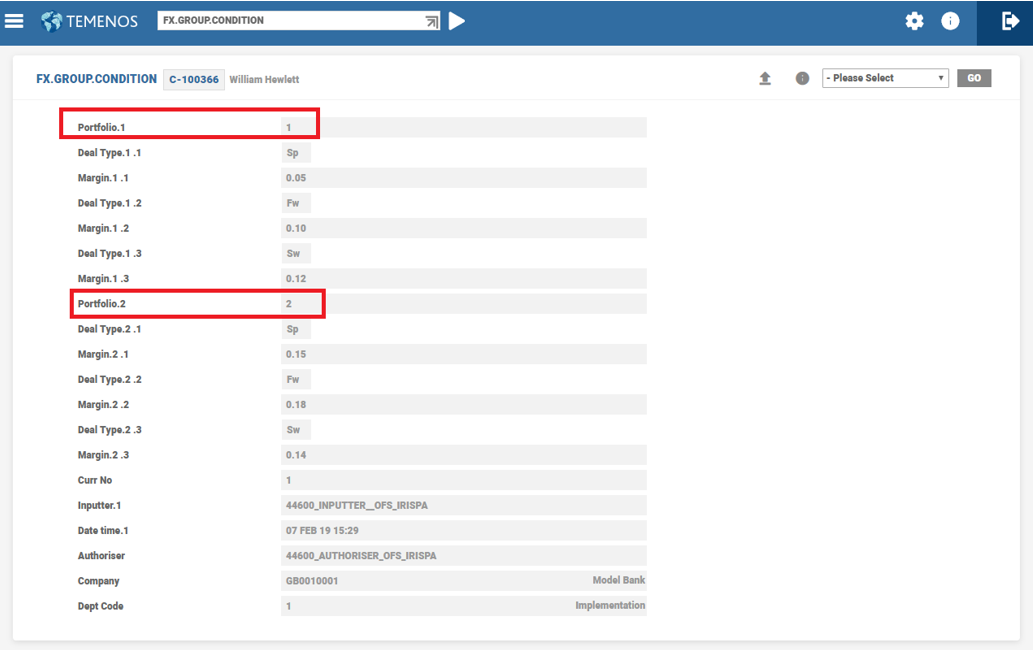
Both portfolios are updated with the FX.GROUP.CONDITION table ID.
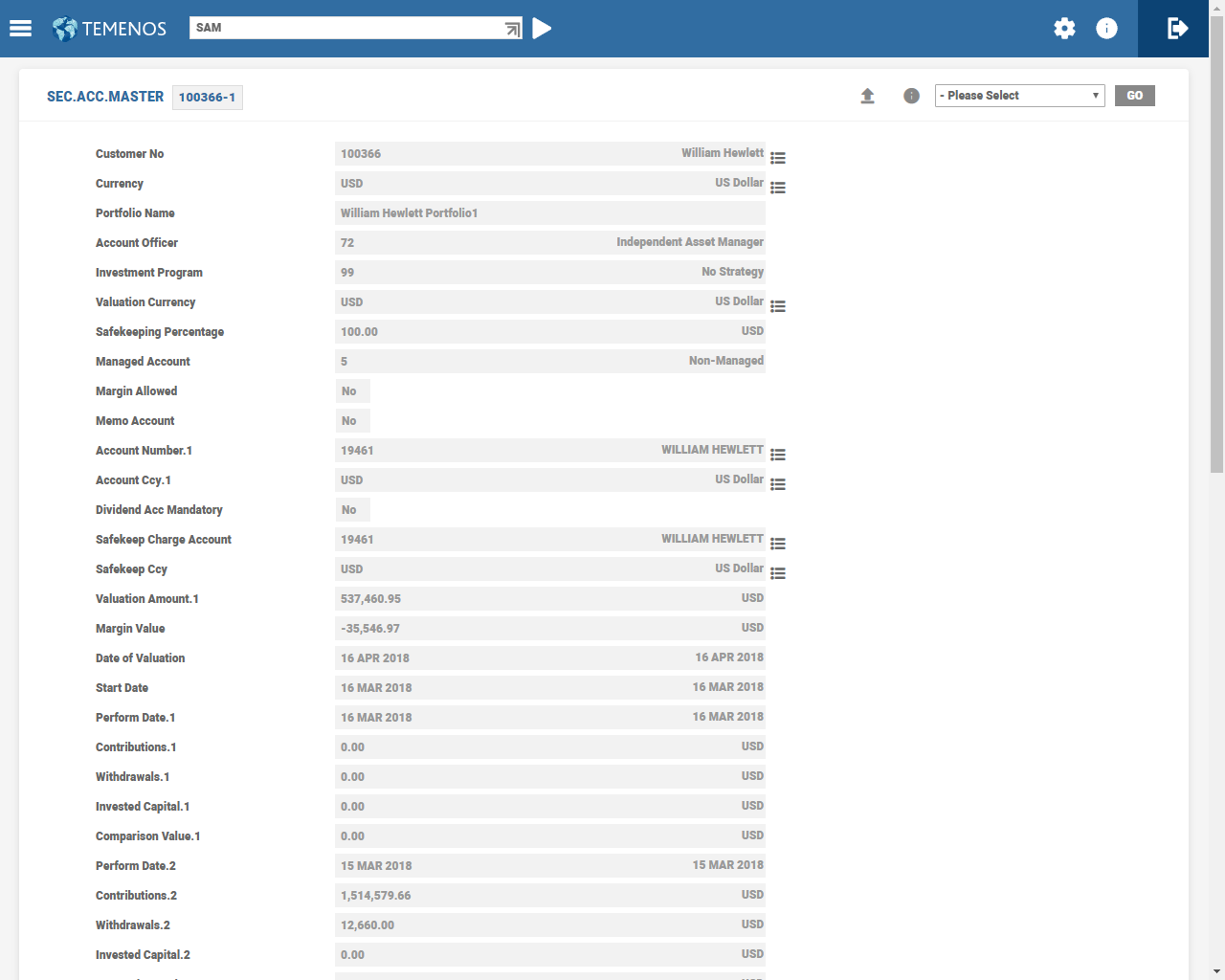
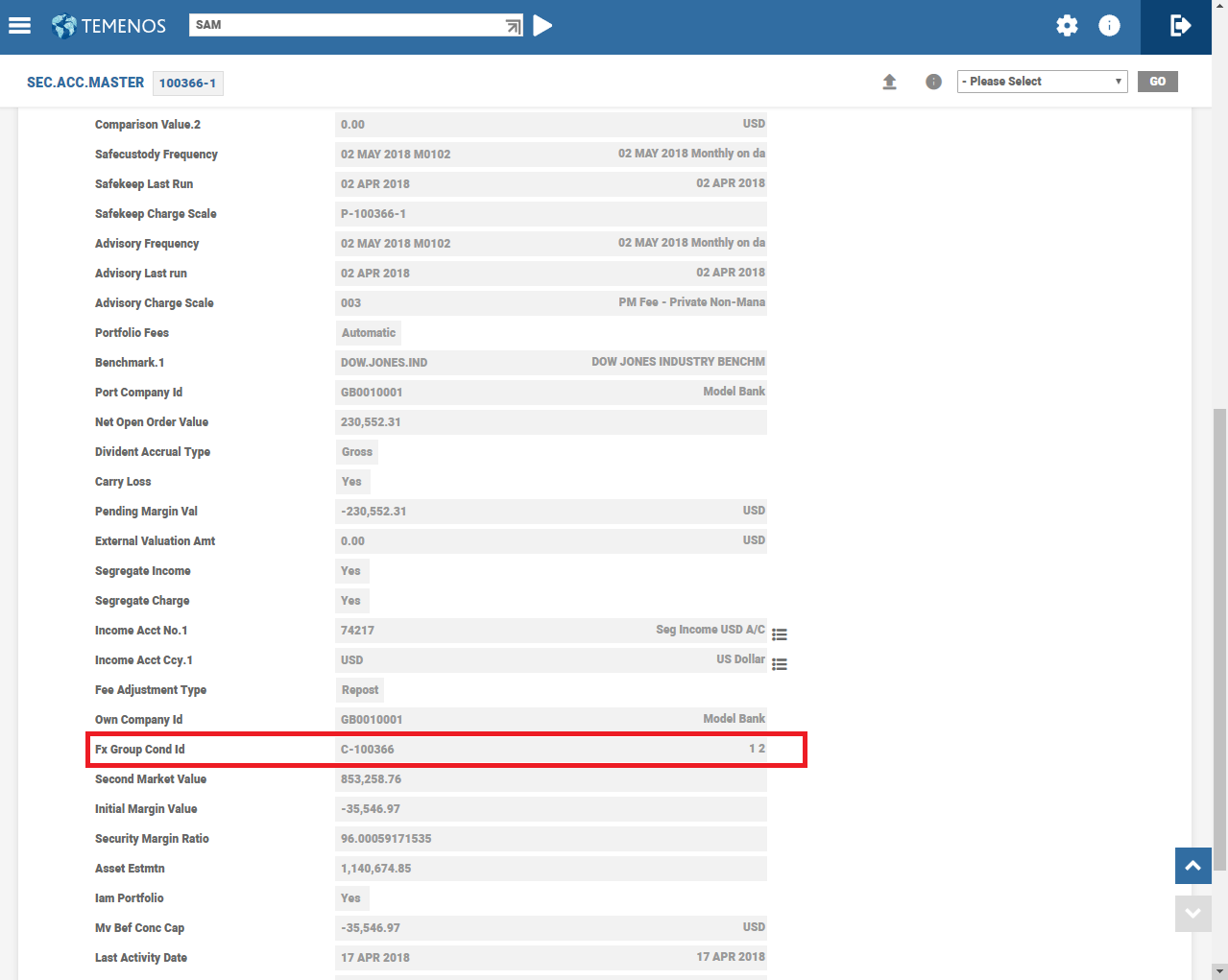
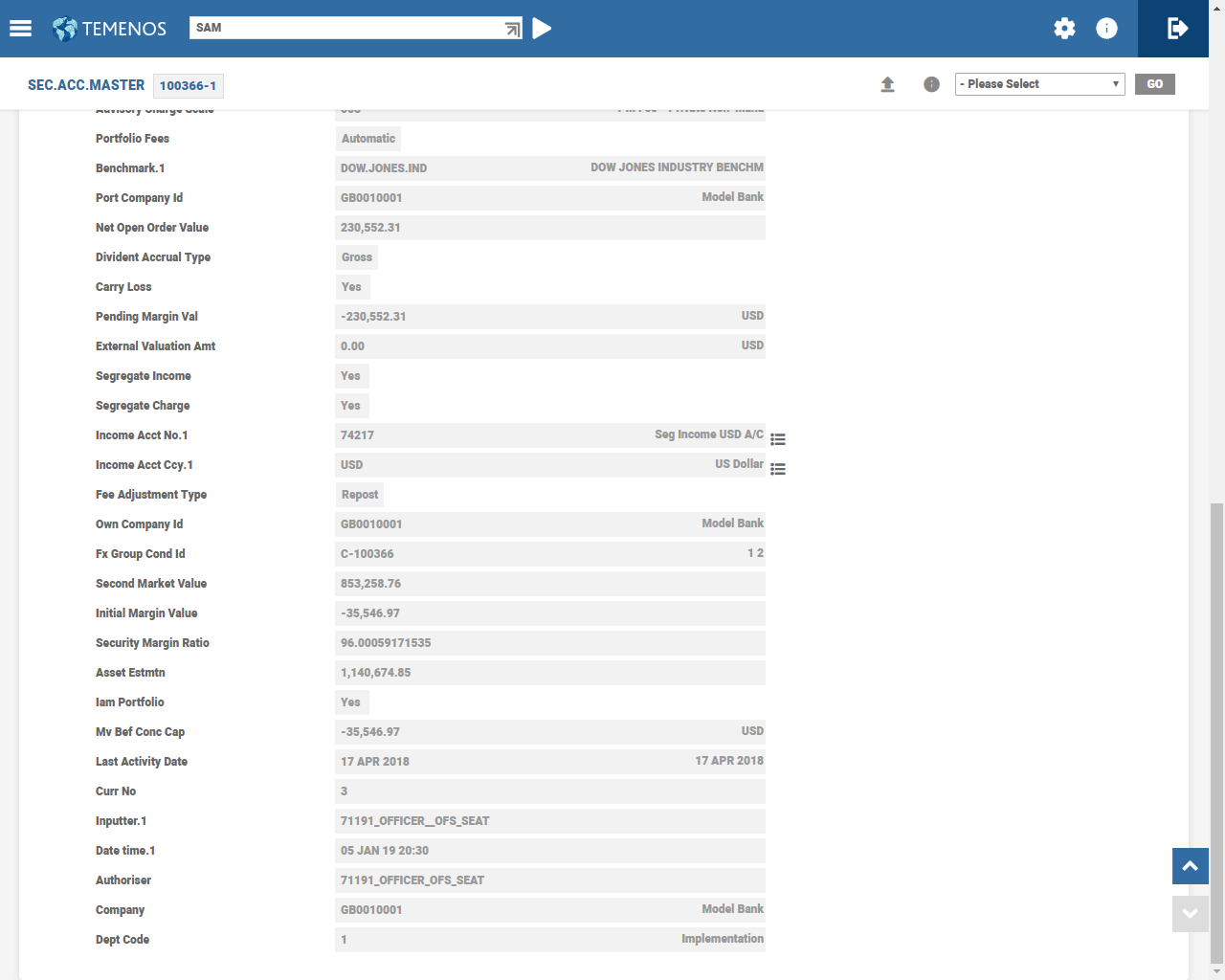
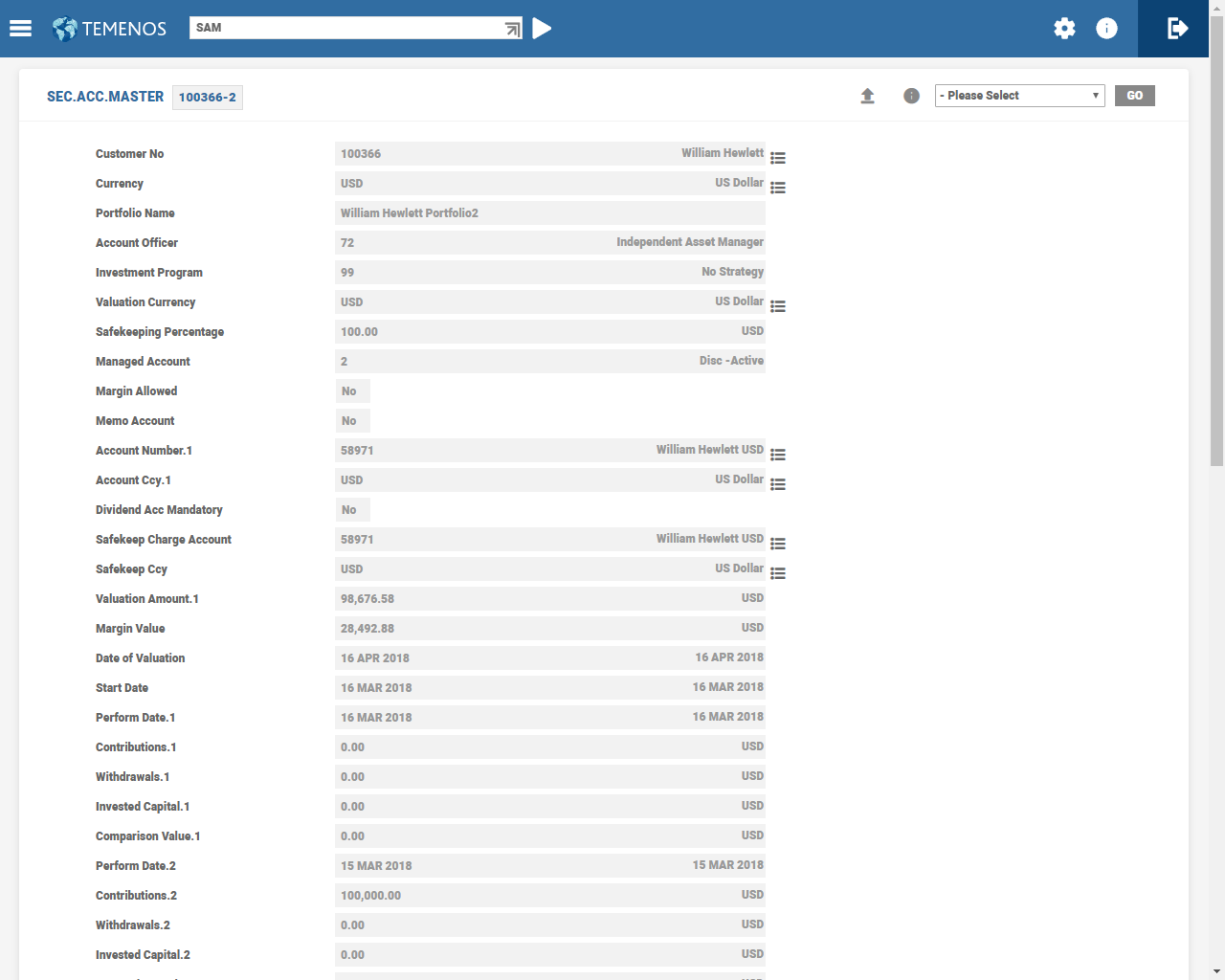
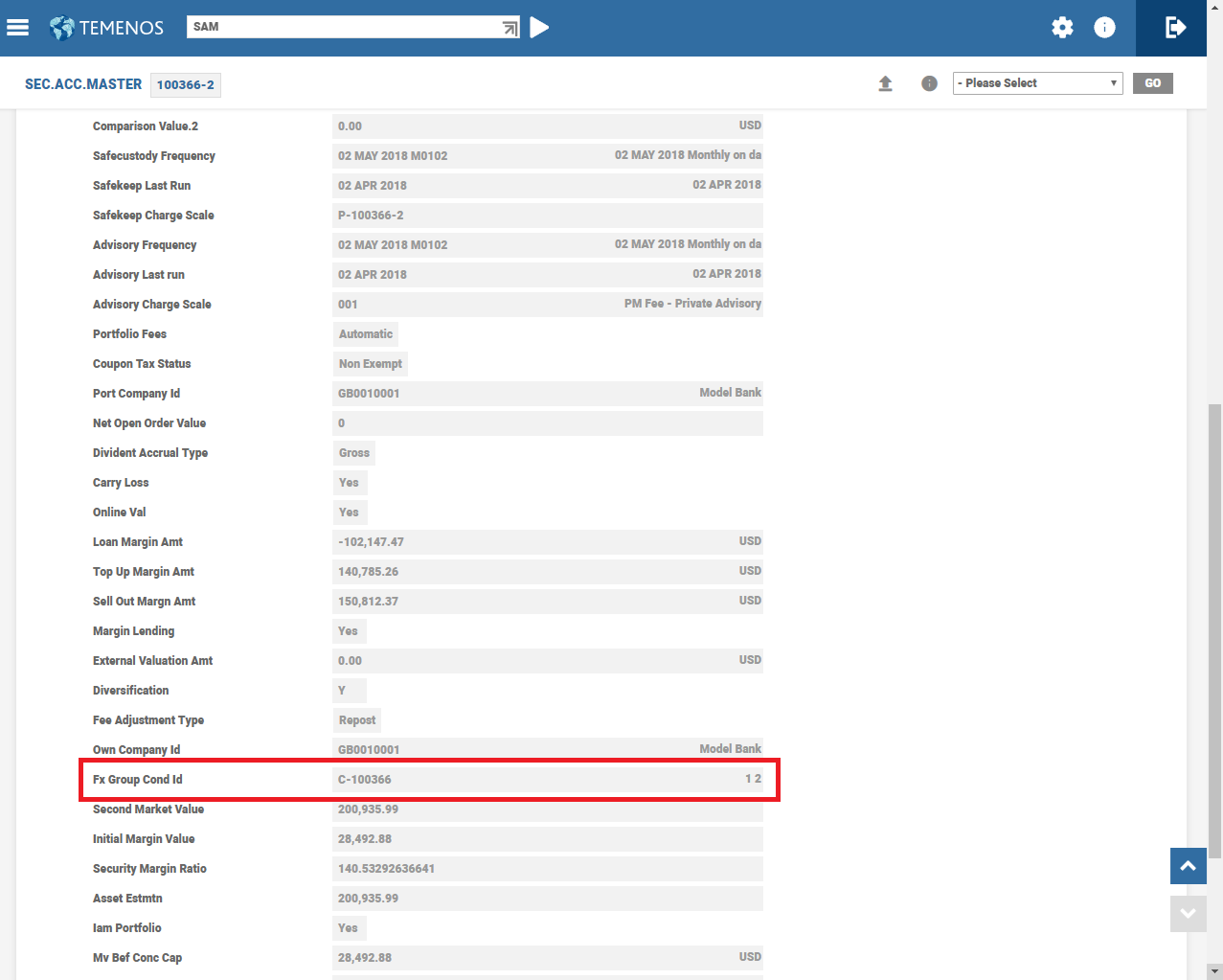
Additionally, check in the CUSTOMER.CHARGE table for the customer 100366 against FX.MARGIN.
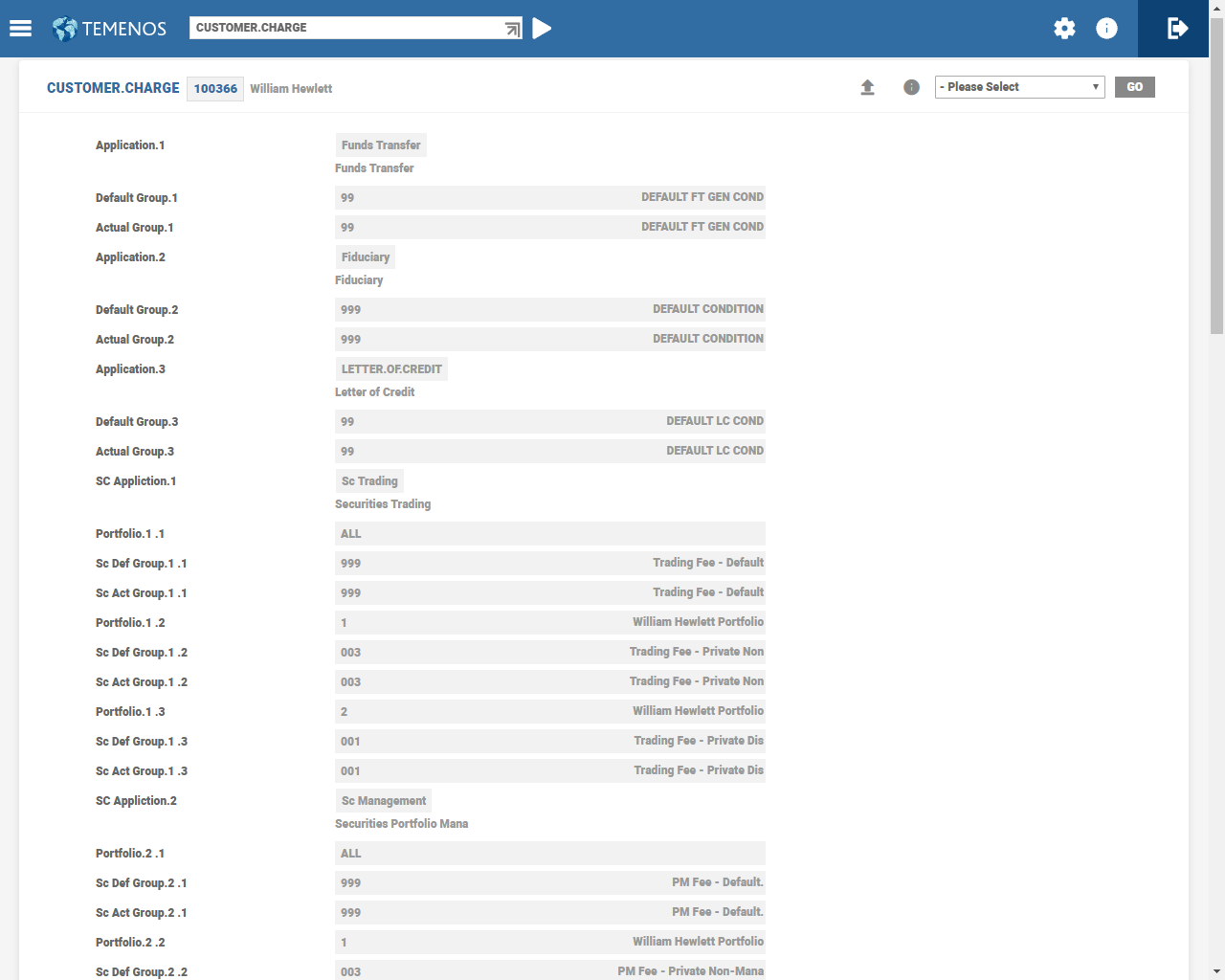
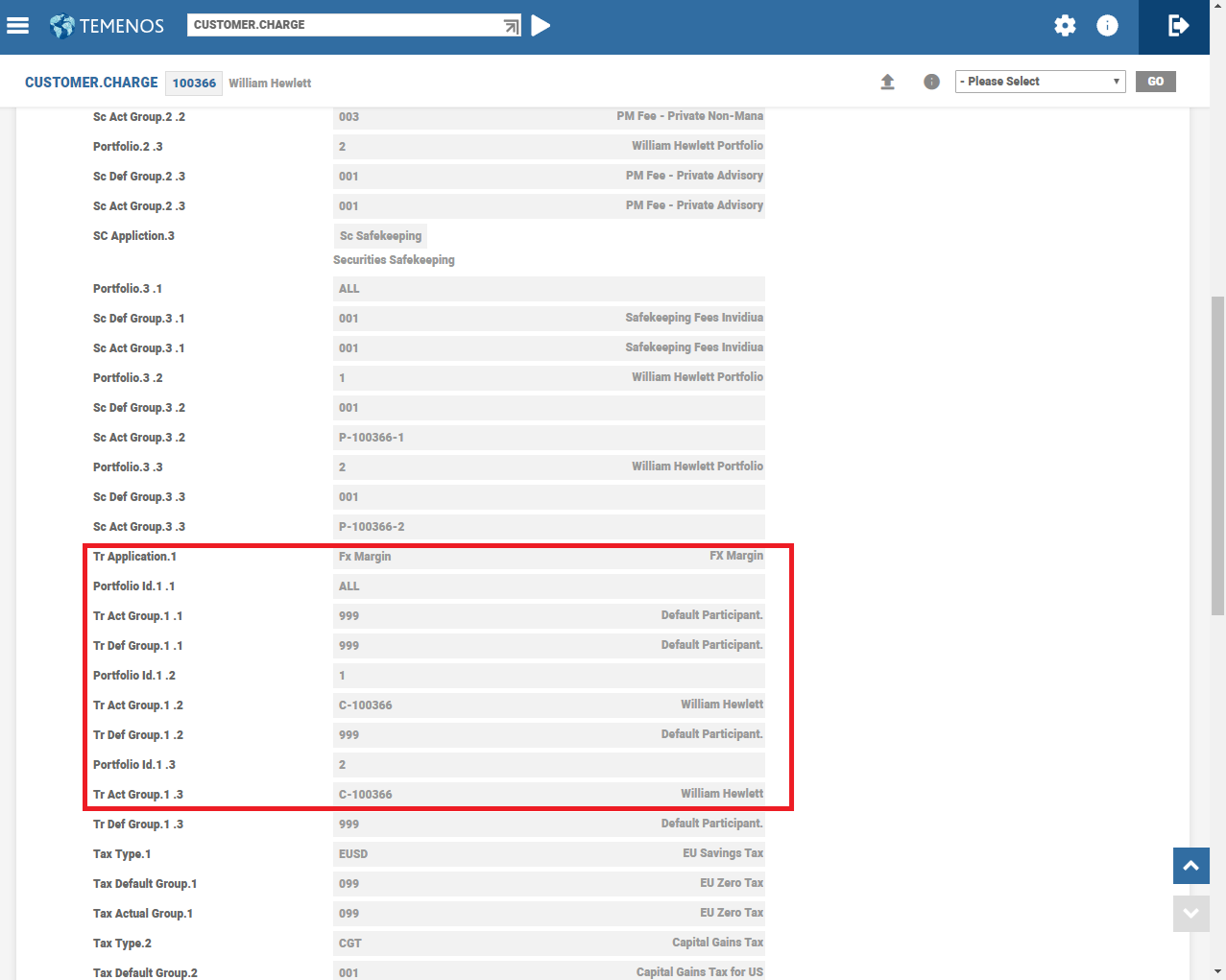
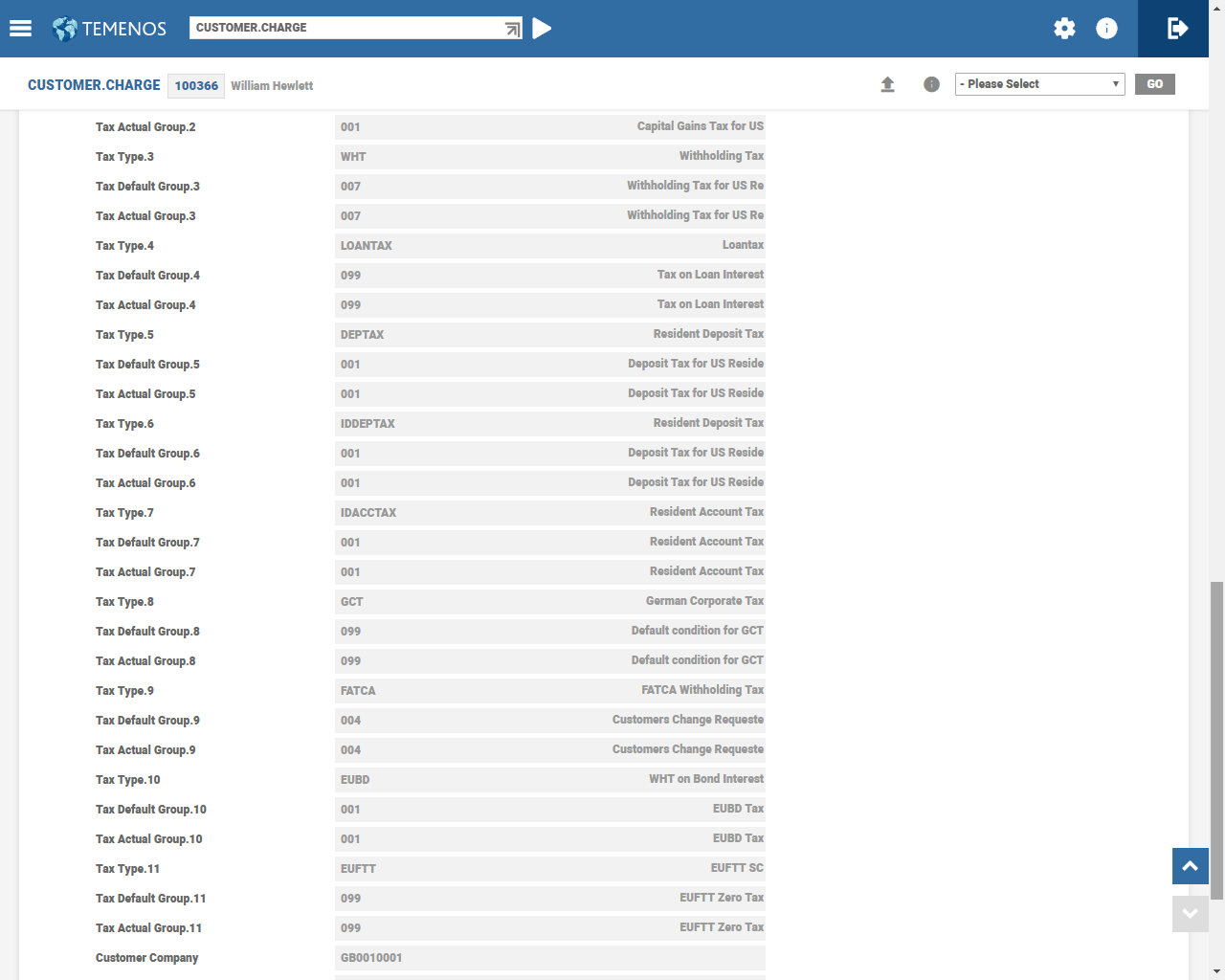
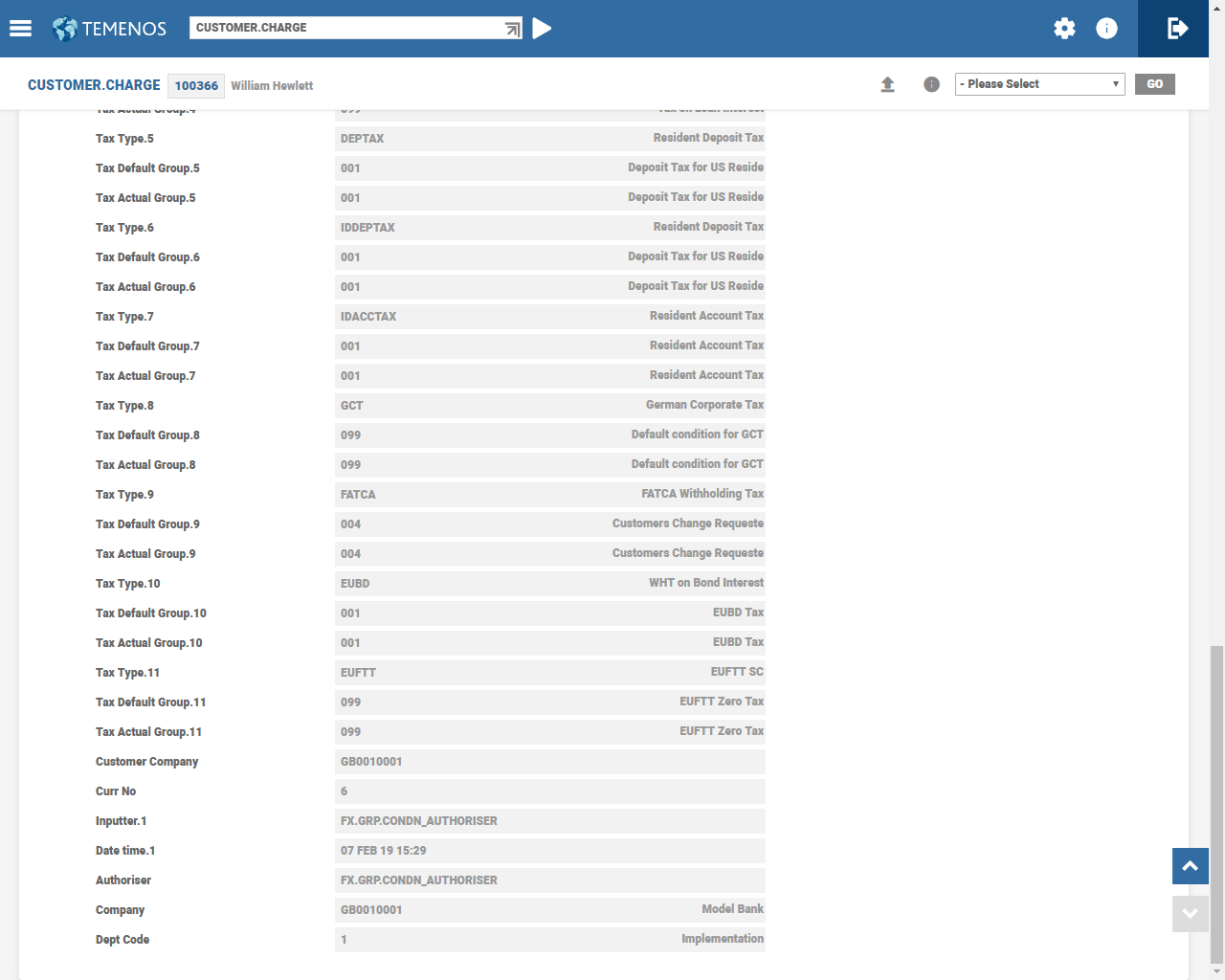
In a customer-specific record, if the customer has several portfolios that attract different margin rates, the system allows the user to define the margin rates for each of the portfolios (by multi-valuing the fields). In each multi-value, the user can define the applicable margin percentage for supported FX deal types (spot, forward and Swap), Securities (SC) and Derivatives (DX) or link to a record in FX.COMM.GROUP.
Configuring Margin Percentage for Securities and Derivatives
The user can configure the customer group-specific FX margin specific to Securities (SC) and Derivatives (DX) transactions by expanding the multi-value set of the Deal Type field in the FX.GROUP.CONDITION application and provide the margin percentage or FX.COMM.GROUP for SC and DX. However, the margin definition for SC and DX is optional for the specific customer group or customer. For SC and DX deal types, the user must ensure either the margin percentage or FX.COMM.GROUP is defined.
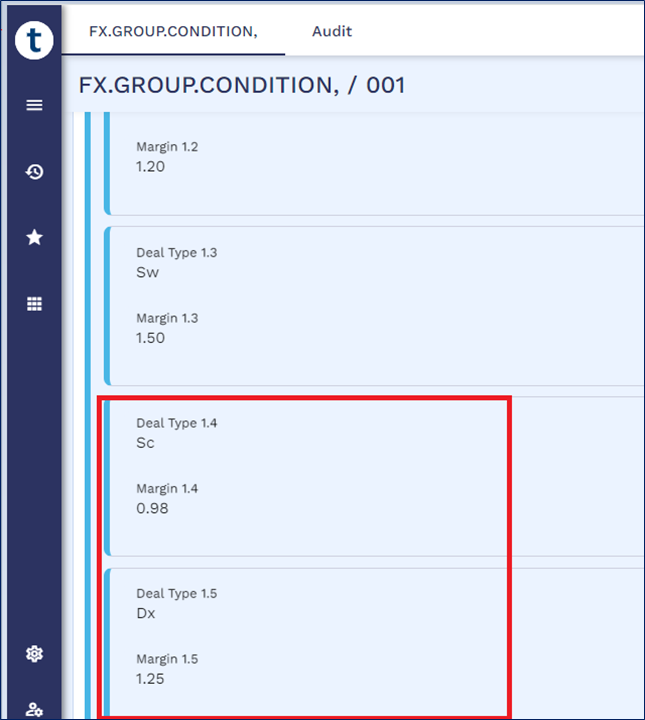
If the margin percentage or FX.COMM.GROUP is defined, and when the Securities or Derivatives transaction involving FX conversion is created, the system considers the margin percentage defined in FX.GROUP.CONDITION or from FX.COMM.GROUP and calculate the market exchange profit of the transaction.
FX.COMM.GROUP
This helps to define commission or margin groups. The Fx Comm GroupID field in a SEC.ACC.MASTER record identifies the FX.COMM.GROUP for a portfolio. Additionally, this application is used in FX.GROUP.CONDITION table to define the margin applicable for a group of customers.
FX.COMM.GROUP specifies the fee, margin or spread schedule for each currency and range of amounts. This schedule is shown in percentage, and the fee charged is the percentage of the deal rate (which is referred to as spread or margin).
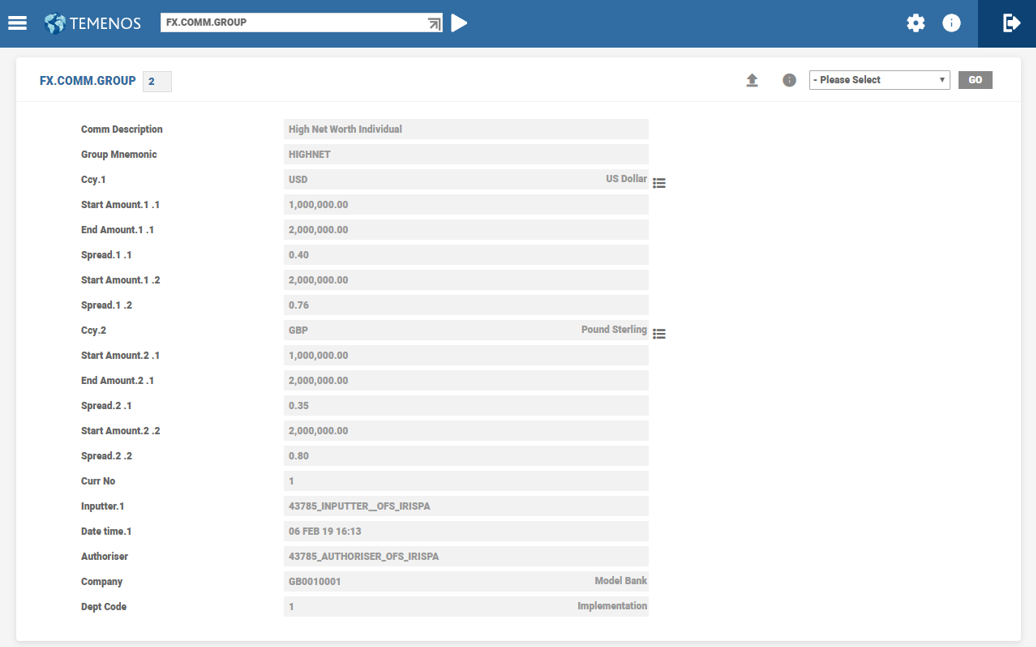
FX.COMM.GROUP table 2 is setup so that a rate of 0.40 is applied in the cash amount from 100,000 to 200,000 USD, and 0.76 in 200,001.00 and above.
Linked Commission Groups
The FX spread is also expressed as a percentage of the FX commission of another group by using the Group Link field. For example, the setup of FX.COMM.GROUP table 1 is as follows:
| Field | Value |
|---|---|
| Comm Ccy | USD |
| Start Amount | 0 |
| End Amount | 100,000.00 |
| Spread | 0.6 |
| Group Link | 2 |
| Start Amount | 100,000.01 |
| End Amount | |
| Spread | 0.5 |
| Group Link | 2 |
The setup of FX.COMM.GROUP table 2 is as follows:
| Field | Value |
|---|---|
| Comm Ccy | USD |
| Start Amount | 0 |
| End Amount | 150,000.00 |
| Spread | 0.04 |
| Group Link | |
| Start Amount | 150,000.01 |
| End Amount | |
| Spread | 0.01 |
| Group Link |
The amount is 120,000 USD by using commission from FX.COMM.GROUP table 1. Hence, the commission rate is 50% of 4% (that is, 2%).
Customer Specific Record ID without a Portfolio ID
When there are multiple portfolios with the same margin percentage or no portfolios at all, it is advisable to leave the Portfoliofield blank. The system defaults the field with None, and the margin percentage defined in one single multi-value is applied to all the deals of that customer.
The record ID gets updated in the CUSTOMER.CHARGE table and also in the portfolios (if available) from where it is defaulted at FX contract level.
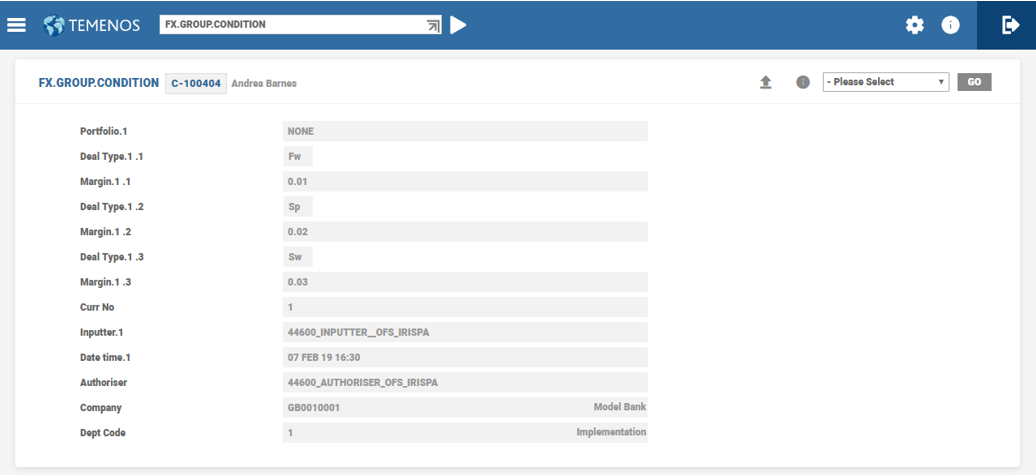
The system defaults the Portfolio field to None, as the user does not provide any value for this field. However, if there are portfolios for this customer, the FX Group ID still gets updated in all the Portfolios or SAM and also in the CUSTOMER.CHARGE record (that is, the same spread percentage is applicable for all the portfolios).
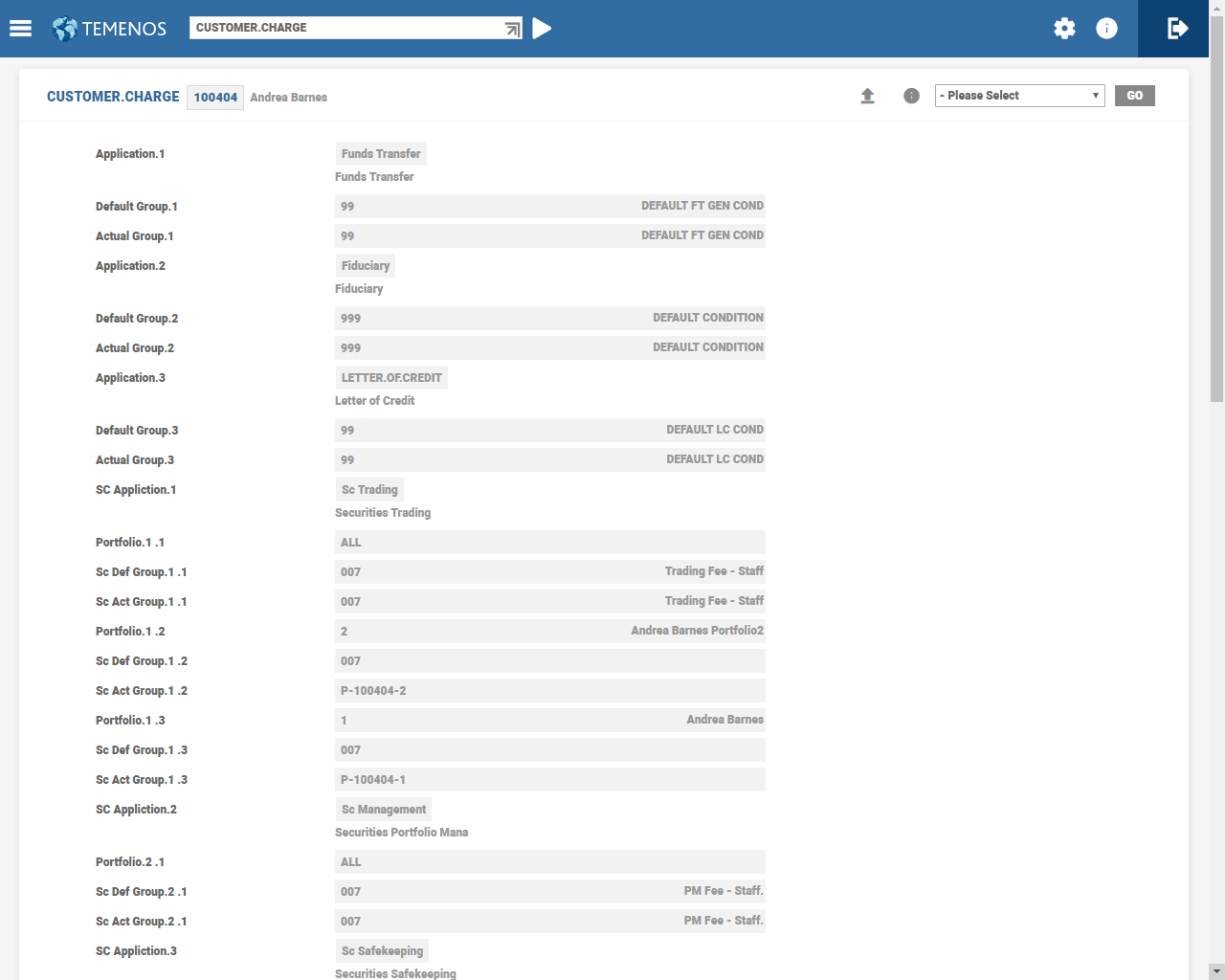
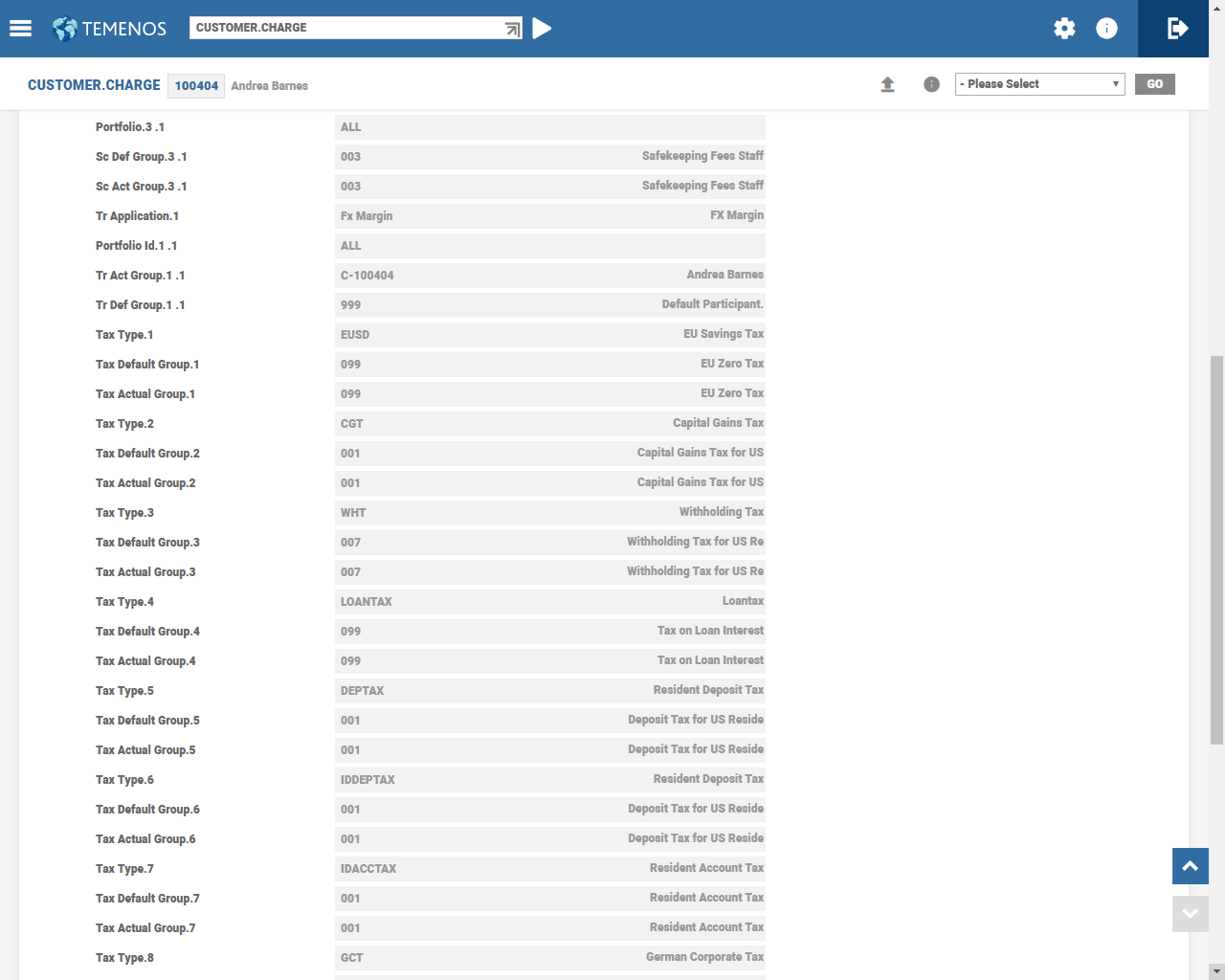
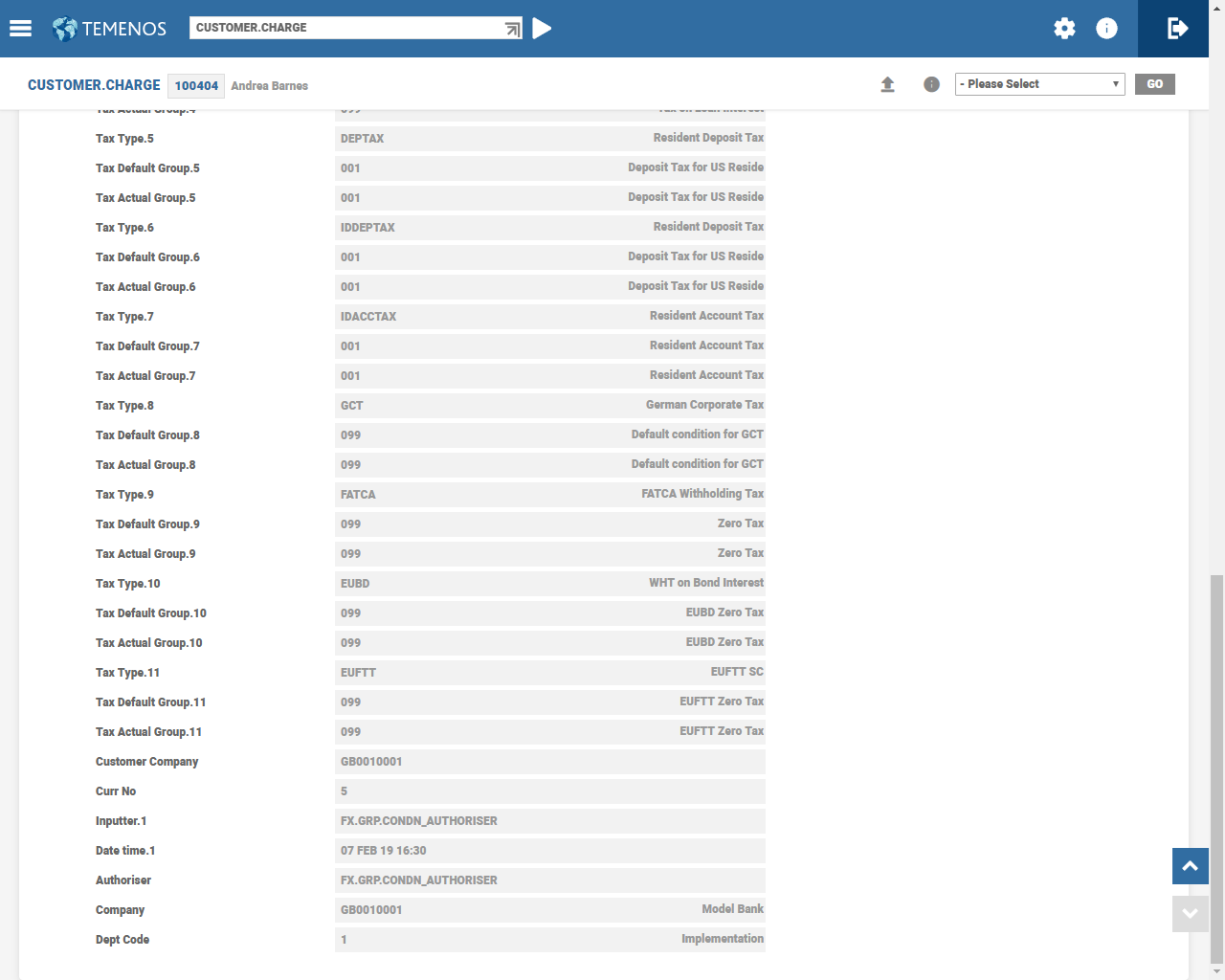
When there are multiple portfolios, the requirement is only to define specific rates for certain portfolios and allow the rest to take the Group ID or default Group ID. The user can define the margin percentage only for those portfolios and leave the rest.
Group ID
This ID is the same as FX.GEN.CONDITION. Margin percentage specified for a group is applicable to all the customers in a particular group identified by the ID. The customers who do not meet the defined criteria are identified by a default group ID.
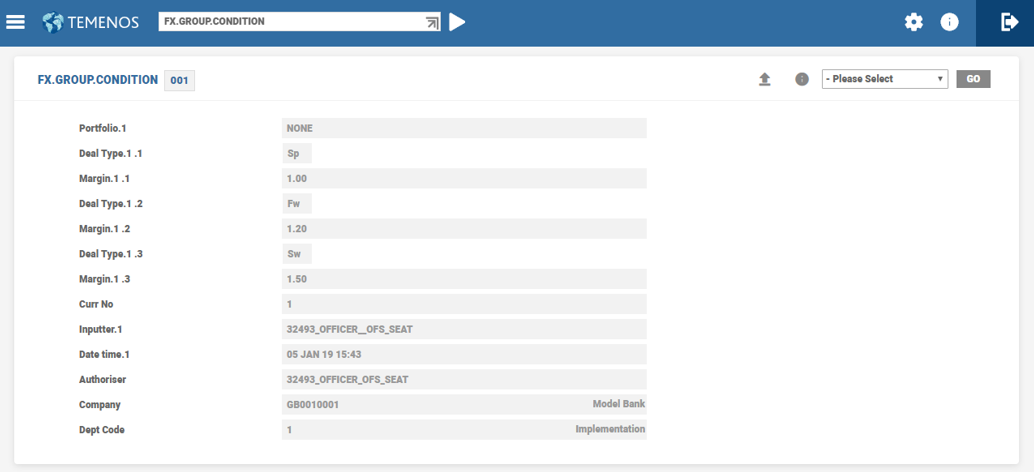
The Portfolio field is not applicable for a Group ID record, hence, the system defaults the value as None.
FX.GROUP.CONDITIONM.Defaulting Condition Group ID in SAM
Following is the priority in which the FX.GROUP.CONDITION table ID defaults in SEC.ACC.MASTER:
| Priority | Example |
|---|---|
| Customer Specific Record ID (if defined) | C - 95001 |
| Group ID | 001 - Customer or customer portfolio meets the given criteria. |
| Default Group ID | 999 - Customer or customer portfolio does not fit into any one of the above two. |
SEC.ACC.MASTER to identify the applicable Group ID and defaults the same in FX deal.
Defaulting Condition Group ID (When SAM is Not Defined)
When the customer (counterparty) does not have a SAM, the system refers to the CUSTOMER.CHARGE table and defaults the ID directly in FX deal.
Application of Margin at FX Deal (Manually)
Irrespective of the Parameter setting in FX.PARAMETERS, the FX application allows the user to:
- Input the margin percentage (manually) along with the treasury rate.
- Calculate the customer rate by applying the margin to the treasury rate.
The FX.PARAMETERS set as Yes ensures to default the Group ID in FX deal, either from SAM or CUSTOMER.CHARGE table and defaults the margin percentage automatically.
Impact on Market Exchange Profit Functionality
Before introducing the FX margin functionality, the Treasury Rate field was used only in the context of marketing exchange profitability. Now, the same is followed in FX margin functionality. The marketing exchange functionality works in both the cases:
- Treasury Customer and Treasury Rate fields have a value and the customer rate is manually inputted by the user (original functionality).
- Treasury Customer and Treasury Rate fields have a value, and the customer rate is derived by using FX margin functionality, that is, margin applied on Treasury rate.
In this topic